






Uh oh...
It appears that you're using a severely outdated version of Safari on Windows. Many features won't work correctly, and functionality can't be guaranteed. Please try viewing this website in Edge, Mozilla, Chrome, or another modern browser. Sorry for any inconvenience this may have caused!
Read More about this safari issue.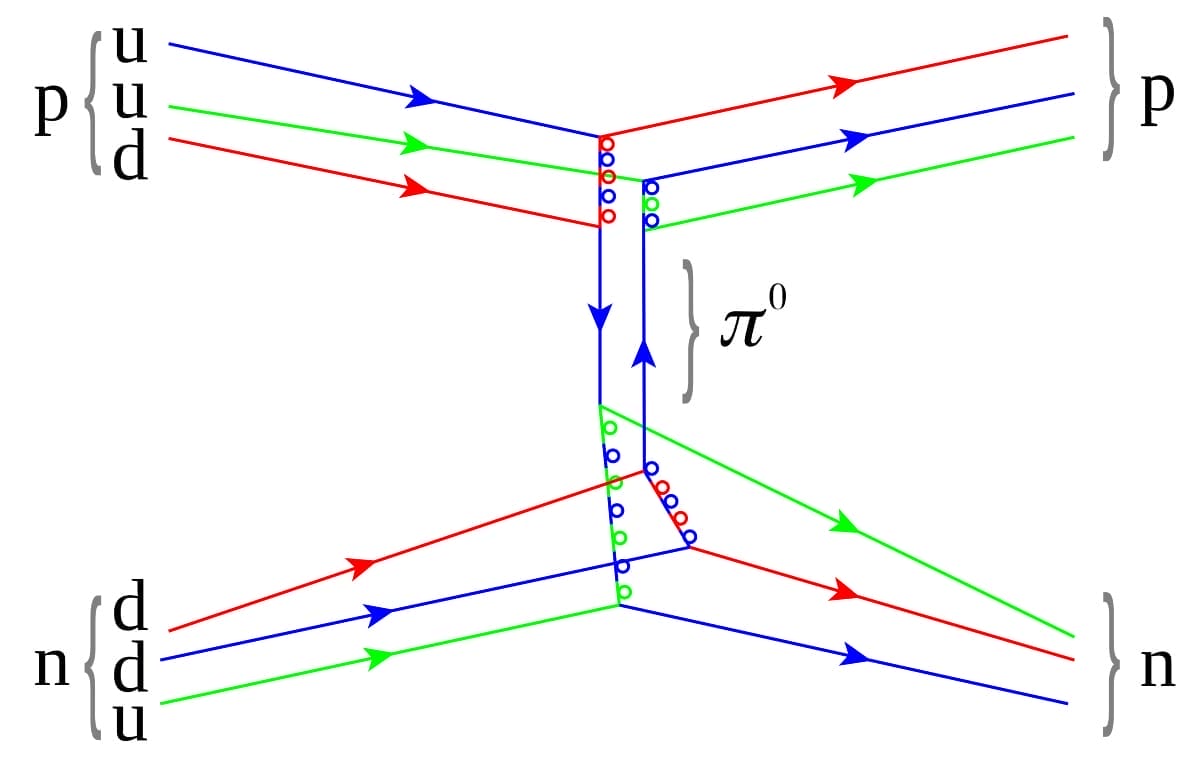

Eugene Feenberg was a celebrated physicist who saw the rise of Nazism, studied briefly with Enrico Fermi, and left a lasting legacy in physics. Feenberg was born in Fort Smith on October 6, 1906. His parents both immigrated from Poland, but not at the same time. His father arrived first, around the age of 13, to live with some relatives in New York. In a 1973 interview with the American Institute of Physics, Feenberg recalled his father as intelligent, although he had not finished high school. He also spoke several languages and wrote letters for people who traveled to his village in Poland.
Once in the United States, Feenberg’s father became a peddler and traveled across the country. He eventually returned to New York, where he met Eugene’s mother. Once married, the pair set off as the older Feenburg continued his peddling career. They made their way to Fort Smith, and Feenberg decided to stop traveling and set up a junk shop.
The Feenbergs found Fort Smith “a very lively community at that time, being on the border and Oklahoma just getting ready to open up.” The junk shop prospered, and Eugene Feenberg grew up in Arkansas. He enjoyed his math and science classes, particularly in high school, and described his teachers as good. He also credited his physics and chemistry teacher, a woman who taught both subjects, for allowing him to pursue his interest in science by doubling up on chemistry classes and working in the lab at his own pace. Despite his excellent grades and interest in academics, no teachers suggested he consider attending college.

Feenberg also had a natural curiosity about radios, electricity and engineering. He grew up in the heyday of radio and tinkered with copper wire, magnets, engines and other parts he found in his father’s junk shop. His parents didn’t discourage this habit, even if they found it strange. Feenberg graduated in 1923 and decided to work with an uncle in Illinois. While there, he found out he had no interest or talent in business and sales. At the same time, his father’s junk shop business floundered, and the elder Feenberg decided to pull up stakes and move to Dallas.
Eugene Feenberg followed the family there and worked in his father’s new business briefly, but he still couldn’t get excited about sales. He managed to save $150 and realized it was enough to enroll in college. In 1926, Feenberg headed to the University of Texas at Austin and entered the physics department. He fit in naturally with the other students and enjoyed studying under some excellent professors. Feenberg studied year-round and graduated in three years with both an undergraduate degree and a master’s in mathematics. He applied to three graduate schools to pursue his doctorate: Caltech, Princeton and Harvard. He received rejection letters from the first two, so when his letter from Harvard arrived, he was scared to open it. He slid the letter from the envelope and found an offer from Harvard for a $500 scholarship.

When Feenberg first entered college, his father had asked him, “What can you do for a living if you study science?” It was time for Feenberg to figure that out.
Feenberg entered Harvard in the fall of 1929 with his scholarship and a promise from his father for $50 each month for living expenses. Of course, the fall played out differently than they could have imagined. The stock market crashed, and the country entered the Great Depression. His father notified Eugene that he could no longer send the money. Fortunately, a professor helped Feenberg secure a part-time job at Raytheon. He worked 50 hours a month and earned exactly $50.
While at Harvard, Feenberg received a traveling fellowship and spent some time wandering through Europe from 1931 to 1933. He met and briefly studied with Enrico Fermi, the physicist who later developed the Manhattan Project. While Feenberg enjoyed his time abroad, he also said he “wasn’t mature enough to be sent over that way.” Still, the experience was memorable. He stayed in Leipzig, Germany, when Hitler was taking over the country and saw stormtroopers in the street harassing Jewish people and parading by Jewish stores. Harvard sent him a letter suggesting he return to the United States. Before Feenberg left, he attended a lecture by Werner Heisenberg, the German physicist who would soon head the German nuclear program. Heisenberg had been awarded the Nobel Prize the year before, in 1932.
Feenberg returned to Harvard that spring and finished his Ph.D.. He’d become interested in nuclear physics while in Germany. He taught a few classes at Harvard, then spent a year as a visiting lecturer at the University of Wisconsin. Then Feenberg worked at the Institute for Advanced Study at Princeton. Even though this was during the Great Depression, Feenberg was earning a good salary and he was single, so he had little financial responsibility, aside from sending a little money to his mother each month.

Feenberg headed to New York University in 1938. While he taught classes, he worked on his main interest, proton-proton interaction. In 1941, when World War II began, Feenberg took a leave of absence from the university to contribute to the war effort. He worked at Sperry Gyroscope Company as an engineer, chiefly on radar technology. After the war ended, he returned to NYU for a year before accepting an associate professorship at Washington University in Saint Louis. Feenberg eventually earned a full professorship at the university and, except for a few stints as a visiting professor, stayed for the rest of his career. In 1975, he was awarded the title of Professor Emeritus.
Throughout his career, Feenberg contributed to many-body physics, the study of many interacting particles (electrons, atoms, and nuclei), and to the quantum many-body problem of deriving the behavior of such multi-particle systems from basic quantum principles.
Feenberg died on November 7, 1977, and is remembered as an intelligent physicist committed to integrity, self-discipline, and the human dignity of his students and everyone he worked with. One fellow physicist reflected that Eugene Feenberg was “unique in his western, rather than urban eastern U.S. origins.” Feenberg’s humble beginnings at his father’s junk shop and his childhood in Fort Smith allowed Feenberg the combination of education and curiosity he needed to become a celebrated physicist.
Quotes from Eugene Feenberg were recorded with AIP on April 13 and 14, 1973, and are available in AIP’s Oral History Interviews.
Header photo by Fred the Oyster, CC BY-SA 4.0, via Wikimedia Commons. All other photos belong to Washington University Photographic Services Collection, Julian Edison Department of Special Collections, Washington University Libraries, and are used with their express permission.


We do the work.
You check your email.
Sign up for our weekly e-news.
Get stories sent straight to your inbox!

Like this story? Read more from Kimberly Mitchell
Ernest James Harris was born in North Little Rock on May 24, 1928, the...
The XXV Winter Olympics concluded this February in Italy, and one of the...
Scott Fitzgerald never forgot the feeling of freedom he got from biking...
Join the Conversation
Leave a Comment