





Uh oh...
It appears that you're using a severely outdated version of Safari on Windows. Many features won't work correctly, and functionality can't be guaranteed. Please try viewing this website in Edge, Mozilla, Chrome, or another modern browser. Sorry for any inconvenience this may have caused!
Read More about this safari issue.

Some Arkansas stories are loud. They announce themselves with roadside signs, preserved buildings and well-worn history books. Others are quieter. They live in memory, in family stories, in churches and reunions and sometimes, if we are lucky, they are written down just in time.
Blackville, Arkansas, is one of those stories.
Unless you grew up there, knew someone who did, or came from a nearby town, you might have never heard of the place. Yet for decades in the 20th century, Blackville was a thriving, self-sufficient, all-Black farming community in northeast Arkansas, established on land owned and cared for by one remarkable man and supported by hundreds of families who worked, worshiped, learned and lived together.
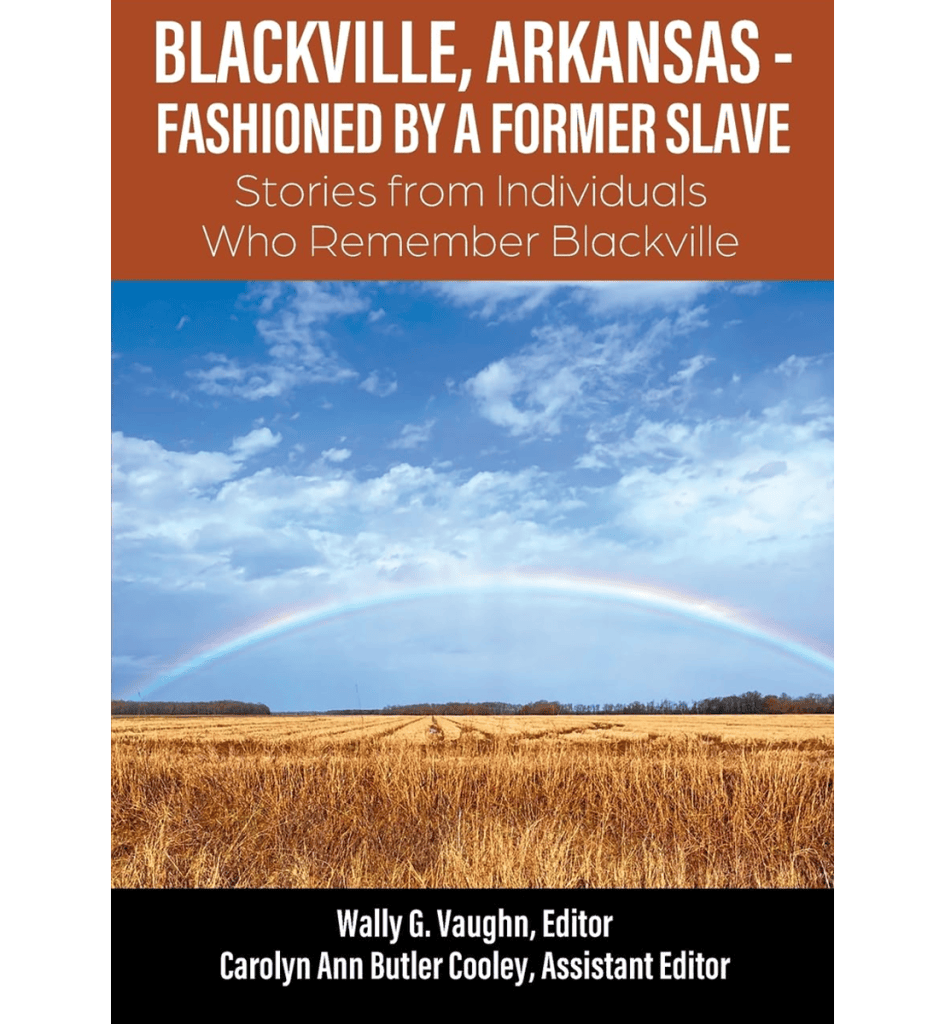
That story, nearly forgotten over time, is now preserved in Blackville, AR – Fashioned by a Former Slave, a new oral history collection curated by Wally G. Vaughn (editor) and Carolyn Ann Butler Cooley (co-editor). What makes this book special isn’t just the history it reveals, but how it was recorded — through first-person voices, captured within the last five years by people who understood that stories fade away if we don’t stop and listen. Friends telling friends, you need to share your story. It was a contagious undertaking!
Where Was Blackville, Arkansas?
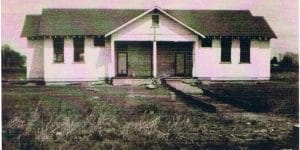
Blackville was in Jackson County, about 14 miles from Newport and near communities like Tuckerman and Shoffner. It was mainly rural farmland, without a courthouse square or government seat. Still, at its peak, Blackville was a full community with homes spread out over miles, including a school, churches, stores and shared spaces that supported everyday life.
Over time, as farming practices changed and people left, Blackville faded from maps and memories. By the late 1970s, very little physical trace of it remained. What still lived on was mostly in the people who grew up there.
Understanding Blackville
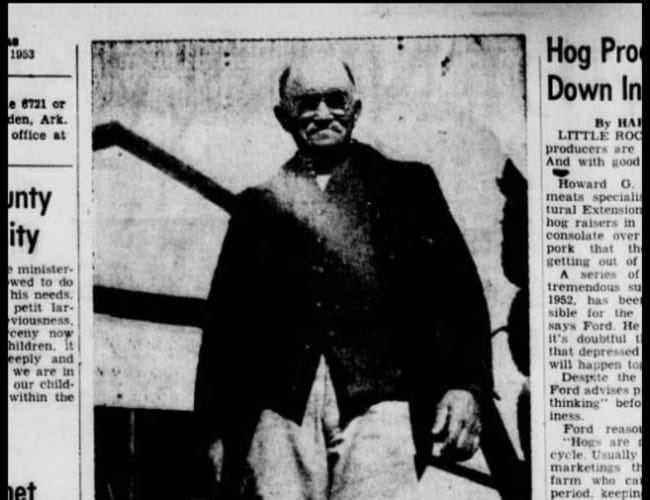
Blackville was established in the late 1800s by Pickens William Black Sr., a former slave from Alabama. By the 1880s, he had moved to Jackson County, Arkansas, where he began gradually buying land. What started as small parcels grew through his determination and vision, especially by acquiring land abandoned by timber companies. He purchased land, cleared the timber, sold the lumber, and reinvested every dollar into buying more land, repeating this cycle for decades.
By the time he died in 1955, Mr. Black owned thousands of acres spanning miles, making him one of the most significant Black landowners in Arkansas history. But the story of Blackville was never just about land ownership. It was about how that land was used and how people were treated.
People who came to Blackville often arrived as sharecroppers, many having moved from place to place in search of better opportunities. What they found here was different. Mr. Black provided land, housing, livestock and tools. People worked hard, but they were treated fairly. They were paid honestly and spent their money within Blackville, supporting a local economy that did not depend on external systems.
There was no official government seat in Blackville, but people shared a common understanding of how life worked there. Several storytellers described it simply as a place guided by principles, often summarized as ‘do unto others.’ Mr. Black was widely seen as the community’s moral center. Expectations were clear: everyone worked, everyone contributed, and everyone benefited.
At its peak, Blackville housed hundreds of residents and functioned as a fully self-sufficient settlement. It had cotton gins, churches, a school and local stores. There were mechanics whose only job was to maintain dozens of tractors, teams dedicated to feeding livestock, and crews responsible for caring for houses and buildings spread across miles of land. Work began early, for boys and girls alike, and idleness was not part of the community’s culture.
That strength carried Blackville through the first half of the 20th century. But as farming technology evolved, cotton pickers and pesticides reduced the need for large labor forces. Families gradually moved to nearby towns or northern cities like Detroit in search of new opportunities. By the 1960s, only a small number of families remained, many growing old on land that had once supported hundreds.
What persists today is not the town itself but its story, crafted through discipline, fairness, opportunity, and a vision that showed what could be accomplished when leadership and community worked together.
Growing Up in Blackville
What stood out most to the editors as they recorded these stories was how ordinary extraordinary things felt to the people who grew up there.
Children remembered stores that sold everything from groceries to jewelry. They recalled benches out front on Sunday afternoons, with people sitting and talking, sodas in hand. They remembered school days, chores, church and early mornings at work.
They also remembered airplanes.
Pickens Black Sr.’s youngest son, Pickens Black Jr., became an aviator in the mid-twentieth century. He built his first aircraft by hand, and when he was legally prevented from flying it, he purchased a passenger plane. Pickens Black Jr. was the first Black licensed pilot to fly in Arkansas.
For the children of Blackville, seeing an airplane parked nearby was so common that it hardly caught their attention. One woman recalled being taken for a Sunday-afternoon ride as a first-grader, flying over Blackville and landing as if it were the most natural thing in the world.
They only realized later in life how uncommon that experience was, especially in the 1940s and 1950s, within a rural, all-Black Arkansas community.
What This Collection of Stories Teaches Us
Blackville, AR-Fashioned by a Former Slave is not written about people. It is written by them.
Each story captures the storyteller’s own words, with their name included. Vaughn and Butler Cooley emphasize that they are not authors but collectors and curators. They asked questions. They listened. They typed. They organized. The stories belong to the people who experienced them.
Through these voices, Blackville stands as a place of dignity, discipline, education and opportunity. Children learned science at an early age. Many pursued studies in chemistry, biology and other fields. Veterans returned to a community that valued their service. Work was expected, but so was care.
Most importantly, Blackville demonstrates what was achievable, even during periods characterized by segregation and exclusion.

Why Preserving Arkansas History Matters
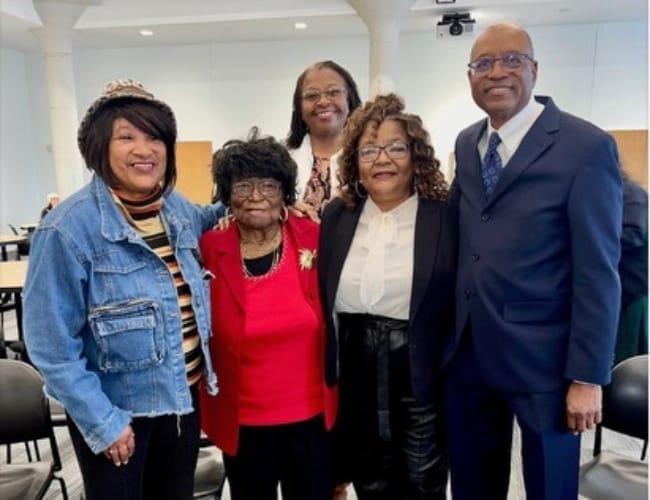
This story isn’t just history. Many voices in this book belong to people still living. One woman even brought her 93-year-old grandmother, who grew up in Blackville, to a discussion event in Little Rock. We are only one or two generations away from those times. That closeness in time makes this work especially important now.
As Vaughn explains, the book has become a guide for other communities to follow; oral history stories recorded for future generations. History isn’t just stored in archives and books; it lives in people. And once those people are gone, the chance to preserve it disappears.
For those who believe they’ve learned all there is to know about Arkansas history, Blackville offers something new and much needed. It challenges assumptions. It broadens the narrative. It reminds us that greatness doesn’t always make a loud entrance.
When you listen to it, Arkansas gains not just a story from the past, but a guide for honoring communities, dignity, and hope in the years to come.


We do the work.
You check your email.
Sign up for our weekly e-news.
Get stories sent straight to your inbox!


Like this story? Read more from Keisha Pittman McKinney
It's officially soup season in Arkansas. After a period of cold weather,...
Stuffing an Easter basket is one of those quiet rites of parenthood....
Arkansas has long been fascinated with outlaws. From Jesse James and Bill...
Join the Conversation
Leave a Comment