







Uh oh...
It appears that you're using a severely outdated version of Safari on Windows. Many features won't work correctly, and functionality can't be guaranteed. Please try viewing this website in Edge, Mozilla, Chrome, or another modern browser. Sorry for any inconvenience this may have caused!
Read More about this safari issue.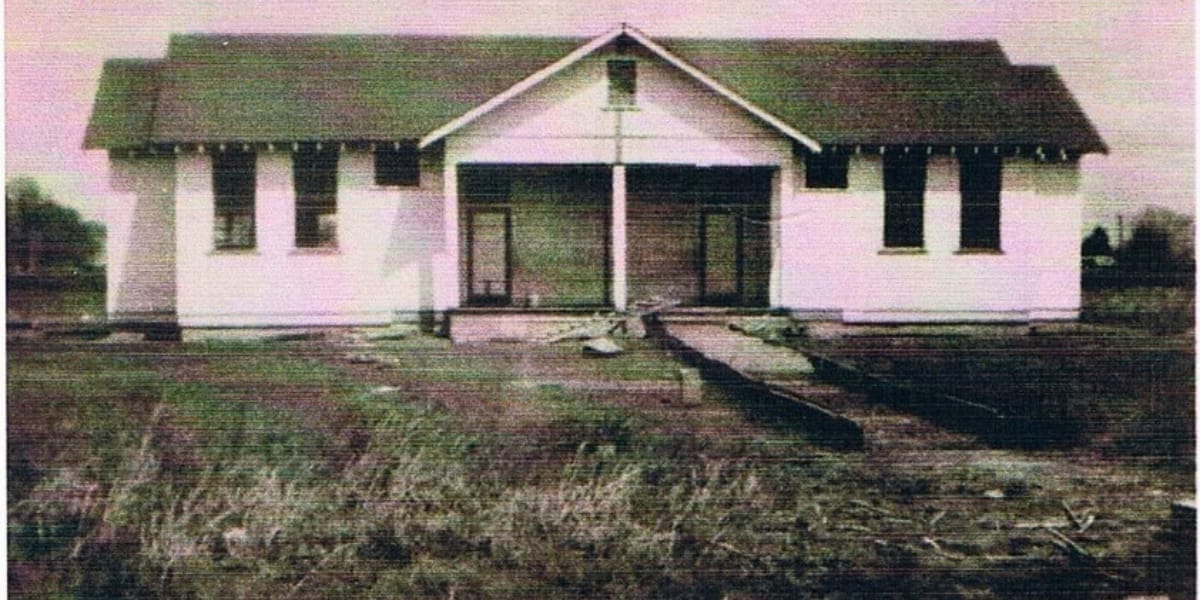

When most people think of school integration in Arkansas, they recall the bravery of the Little Rock Nine and the crisis at Little Rock Central High School, a National Historic Site. Names like Daisy Bates, Elizabeth Eckford and Ernest Green are remembered as symbols of courage amid national scrutiny and violent resistance.
Even now, nearly seventy years later, those historic communities still grapple with the long shadows of that moment. It is an Arkansas story, but it’s also an American one.
What often goes unnoticed is that before soldiers lined the sidewalks in Little Rock, before television cameras captured chaos and confrontation, a small farming town in northeast Arkansas quietly entered history and, for a brief moment, showed the nation what integration could look like when community, conscience and courage worked together.
That town was Hoxie.

Integration in Arkansas Before the Headlines
Following the 1954 Supreme Court decision in Brown v. Board of Education, communities across Arkansas faced a choice. Some resisted, some delayed and a few advanced. During the fall 1954 semester, Fayetteville and Charleston became the first Arkansas school districts to integrate, doing so with little trouble and even less national notice.
Hoxie came a year later, but with a difference that made its story nationally important.
On July 11, 1955, while many Arkansas school districts were on summer break, Hoxie schools opened their doors. That morning, 21 Black students entered what had once been an all-white school system. There were no soldiers, no police lines, no shouting crowds. Neighborhood children walked to school. Teachers taught. Students took their seats. Classes started.
It was, by most accounts, uneventful.
And that was exactly the point.
A Farming Town, A Shared Life
Hoxie, in the 1950s, was a small farming town in Lawrence County. Most families, black and white, made a living connected to the land. Children helped pick cotton during the split-term school break. Homes were simple, and opportunities were few. Economic divides were not significant.
In many ways, the town already shared a life. Children played together after school. They walked the same streets, shared the same fields, and grew up side by side. The separation that existed was legal and institutional, not social.
For a brief moment, they showed the nation what integration could look like when community, conscience and courage worked together.”
Segregation in Hoxie followed the laws of its time, not necessarily the hearts of its residents. The “colored” school highlighted inequality: no indoor plumbing, a bucket carried daily from a neighbor’s pump for drinking water, a potbelly stove for heat, torn hand-me-down textbooks, and an outdoor outhouse surrounded by mud. The gap was evident.
When the Supreme Court declared that separate educational facilities were unconstitutional, Hoxie’s school board saw an opportunity to do what many had long believed was correct and financially feasible for the district’s budget.

“Right in the Sight of God”
Led by Superintendent Kunkel Vance, the Hoxie School Board voted unanimously to integrate. Their reasoning was straightforward and, in its own way, bold. Vance cited three reasons for the decision: it was right in the sight of God, it complied with the law of the land, and it was financially responsible.
Maintaining two separate school systems in a small, underfunded district was unsustainable. More importantly, board members believed children could not truly learn in an unequal environment. Equality was both a moral and a practical goal.
The transition was carefully planned. Parents were prepared for a year. Seating arrangements were thoughtfully arranged. Textbooks were distributed. From the students’ perspective, it felt less like a major upheaval and more like the natural continuation of friendships already formed during the spring harvest season.
For a brief window, Hoxie demonstrated that integration could occur without fear.

When LIFE Magazine Arrived
That window closed two weeks later.
A photo essay in LIFE magazine highlighted Hoxie as a model of peaceful Southern integration. The national attention, meant to praise compliance, instead drew interest from outside segregationist groups. White Citizens’ Councils and pro-segregation activists arrived in the town, many with no previous connection to Hoxie.
The tension that followed was not black versus white. It was mainly white-on-white, with supporters of the school board’s decision facing opponents.
Protests erupted, and threats were made. Parents received intimidating letters, and attendance declined as fear spread. Still, the school board refused to back down. When Governor Orval Faubus chose not to intervene, the board took the case to federal court. The NAACP got involved, and a new young lawyer, Thurgood Marshall, sent a letter to the families of the black children, expressing their support.
In Nov. 1955, U.S. District Judge Thomas C. Trimble issued a restraining order against the segregationists, ruling that they had conspired to interfere with lawful integration. When the decision was appealed, the 8th U.S. Circuit Court of Appeals upheld Hoxie’s integration, with the U.S. Department of Justice joining the case in support of the school district.
It was the first time the federal government officially supported a local school district trying to comply with Brown v. Board of Education.
Hoxie became the first court-supported integration case in Arkansas and one of the earliest nationwide. This legal precedent was cited by other school districts and even in civil cases outside of education, shaping how integration progressed across the country.

Overshadowed, But Not Forgotten
By the time the courts ruled in Hoxie’s favor in Oct. 1956, the nation’s attention had shifted to Little Rock. The spotlight on Central High School overshadowed the quieter, steadier courage of a farming town that had already stood its ground.
From a national perspective, Hoxie faded from view.
Locally, the story never faded away.
Students remained classmates, and many graduated together. Among them was Ethel Mae Tompkins, the first African American to graduate from the integrated Hoxie High School. Today, Tompkins and classmate Frances Green are among the voices ensuring that future generations remember Hoxie’s role in civil rights history.

Where the Story Lives Today
A new museum recently opened, dedicated to preserving this chapter of Arkansas history through Hoxie: The First Stand. A future site will be built to resemble the original “colored” elementary school building and the museum will tell the full story: hope, hardship, resistance, and resolve.
Oral histories, photographs, court documents, and personal memories are collected from those who experienced them. The aim is not to oversimplify the past but to humanize it, showing visitors what can happen when ordinary people choose unity over fear.
Hoxie’s story reminds us that history isn’t only made in capitals and courtrooms. Sometimes it starts at a small-town schoolhouse door when a community chooses to do what is right, even if the whole world is watching.
Before the Little Rock Nine entered Central High, Hoxie took the first stand. And we are all better because of those footsteps!
Images throughout the story are from Hoxie The First Stand archives.


We do the work.
You check your email.
Sign up for our weekly e-news.
Get stories sent straight to your inbox!


Like this story? Read more from Keisha Pittman McKinney
It's officially soup season in Arkansas. After a period of cold weather,...
Stuffing an Easter basket is one of those quiet rites of parenthood....
Arkansas has long been fascinated with outlaws. From Jesse James and Bill...
Join the Conversation
Leave a Comment