






Uh oh...
It appears that you're using a severely outdated version of Safari on Windows. Many features won't work correctly, and functionality can't be guaranteed. Please try viewing this website in Edge, Mozilla, Chrome, or another modern browser. Sorry for any inconvenience this may have caused!
Read More about this safari issue.

Feb. 19 marks an important date that many Arkansans do not realize is a vital part of our state’s history. For years, it was a hidden story, left out of textbooks, overlooked in the Delta swamps and underestimated in significance.
Last year, as I began my Delta Wonder Whirlwind Tour, I had several sites I was eager to visit. Many were connected to the Delta Heritage Trail and public history preservation sites. But one key destination, which honestly caused me to miss some good food stops and ice cream along the way, was the Rohwer Japanese American Relocation Center near McGehee.
I was fascinated to learn about a story I had only seen in a few social media posts and a history discussion at CALS. We even passed the sign on our way to the beach and Lakeport Plantation. My interest was piqued.
Through recent conversations and renewed national dialogue, including reflections from Rohwer survivor George Takei, this chapter of American history has resurfaced in public awareness, so it was high on my Arkansas bucket list.
When we arrived in downtown McGehee with enough time to visit the museum and get directions to the memorial, we knew we were stepping onto sacred ground. We turned off the radio, rolled down the windows, and lowered our voices as wayfinding signs guided our visit through farmland that once held thousands of lives interrupted.
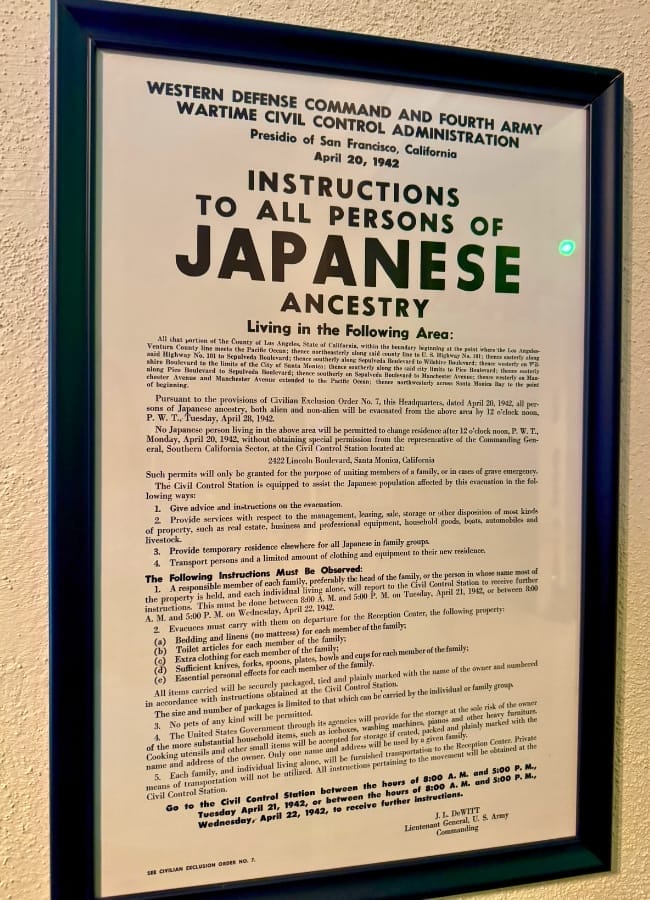
Executive Order 9066
On Feb. 19, 1942, President Franklin D. Roosevelt signed Executive Order 9066. Following the attack on Pearl Harbor, fear and war hysteria spread quickly across the West Coast. Although no confirmed acts of sabotage had taken place among Japanese Americans, over 120,000 people of Japanese descent, two-thirds of whom were American citizens, were forcibly removed from their homes.
They were sent to 10 War Relocation Authority camps across the United States. Two of these camps were in Arkansas: Jerome and Rohwer in Desha County.
History reveals that these actions were motivated by racial prejudice, wartime fears and failures in political leadership. We do not revisit this chapter to shame anyone. We do it to learn. Just as the work during Black History Month does, sharing these stories helps us confront tough truths and gives us a chance to do better.
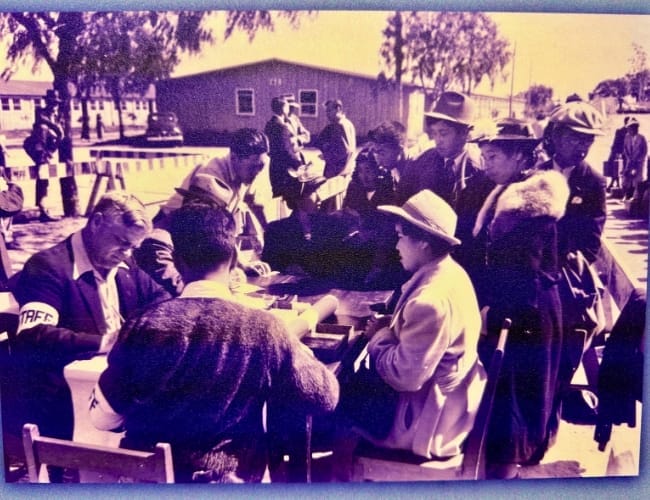
Arriving in Rohwer
The Rohwer Japanese American Relocation Center was established on 500 acres of marshy land in southeast Arkansas, surrounded by an additional 10,000 acres used for farming and timber. The camp was organized into schools, hospitals, administrative buildings, and 36 barracks.
Eight watchtowers guarded barbed wire fences. Families lived in simple wooden barracks equipped with canvas cots and pot-bellied stoves. Three to six families shared communal washrooms and dining areas.
Between 1942 and 1945, more than 8,000 Japanese Americans were held at Rohwer. Most had been forced to leave California, Oregon, Washington and Arizona. They left behind homes, businesses, farms and entire communities, often only able to take what they could carry.
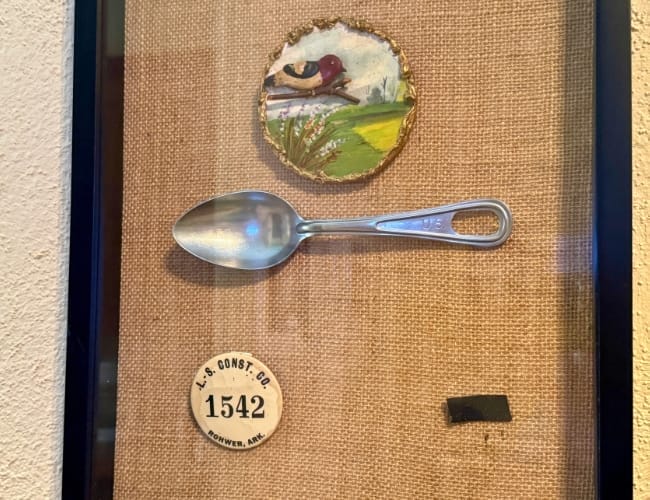
Life at Rohwer
Struggle and strength defined life at Rohwer.
Many internees looked for work inside the camp to earn small wages. Teachers worked in camp schools. Doctors and nurses managed the hospital. Farmers grew crops to support the community. Others worked in carpentry, mechanics and administration.
However, the communal lifestyle put pressure on family structures. Privacy was scarce, and parental authority was challenged. The weight of uncertainty felt overwhelming.
Still, signs of perseverance persisted. Internees expressed their heritage through art. They formed community groups. Young men from Rohwer later volunteered and served with distinction in the U.S. Army’s 100th Battalion and 442nd Regimental Combat Team in Europe, units that would become some of the most decorated in American military history.
A total of 168 people died while incarcerated at Rohwer, many of whom were elderly. Those who chose burial over cremation were laid to rest at what is now the Rohwer Memorial Cemetery.

Closing the Camp
Security gradually eased by 1944. In early 1945, the federal government announced that the camps would close. Rohwer officially shut down Nov. 30 1945.
The barracks were auctioned off and removed. The land now supports farming, with cotton, soybeans, corn and rice grown. Today, only a few physical signs remain, such as the hospital smokestack and the cemetery monuments.
But the stories still endure.

Visiting and Remembering
For travelers and visitors to Arkansas, the journey begins at the World War II Japanese American Internment Museum in the historic McGehee Train Depot. The museum is open Thursday through Saturday from 9 a.m. to 4 p.m. Admission is $5, and children under 12 are free. It’s recommended to allocate half a day to fully experience and explore the center.
When you enter, you begin in a small gift shop area where you purchase admission before moving into a documentary film. The film is longer, so families with young children might want to prepare accordingly. However, for many visitors unfamiliar with this history, the film provides essential context, explaining Executive Order 9066 and how Arkansas became home to two relocation centers.

After the film, you’ll explore exhibits filled with photographs, personal artifacts, documents and oral histories. You will learn about teachers, caretakers, laborers, and children who called Rohwer home under unimaginable circumstances. The museum does an excellent job of connecting national history to local stories.
From there, drive to the Rohwer Relocation Center Memorial Cemetery. Note that if you use Google Maps, you may need to search “Rohwer Relocation Center Memorial Cemetery.” The site is open during daylight hours only and is self-guided.
The drive takes you through peaceful farmland and past the southern end of the Delta Heritage Trail State Park.
On-site, you can drive around the perimeter, using pullouts and navigation signs if you’re short on time. However, I suggest parking and walking. Stand in the middle of the cemetery. Read the names carved into the stones. Look in all four directions and imagine rows of barracks, watchtowers, children running between buildings, and adults trying to stay steady amid chaos and misunderstanding.
It is a sacred space.
Two large concrete monuments stand there. One honors all those who died at Rohwer, including those cremated. The other commemorates young men from the camp who lost their lives serving the United States during World War II.
It is quiet. It is humbling. It is unforgettable.

A Day of Remembrance
Feb. 19 is now officially recognized nationwide as the Day of Remembrance, commemorating the signing of Executive Order 9066. In 2022, President Biden issued a proclamation formally honoring the Day of Remembrance of Japanese American Incarceration During World War II.
The day offers a chance for reflection, dialogue and learning. It reminds us that sharing these stories isn’t about rewriting history but about gaining a deeper understanding of it.
The road to Rohwer isn’t just a drive through southeast Arkansas. It’s a journey into a chapter of American history that took place right here in our Delta fields, during a time when Arkansas made headlines across the nation.
For homeschool families studying World War II, travelers heading to the Gulf Coast, or Arkansans wanting to better understand our state’s role in national history, Rohwer offers an experience that is educational, reflective and deeply human.


Like this story? Read more from Keisha Pittman McKinney
0
Fort Smith is for Pho

It's officially soup season in Arkansas. After a period of cold weather,...
 0
0
Arkansas-Style Easter Basket
Stuffing an Easter basket is one of those quiet rites of parenthood....
 0
0
Legends of the Wild Women of the Natural State
Arkansas has long been fascinated with outlaws. From Jesse James and Bill...
Join the Conversation
Leave a Comment
One response to “The Road to Rohwer”
 Leave a Reply
 Leave a Reply
We do the work.
You check your email.
Sign up for our weekly e-news.
Get stories sent straight to your inbox!


Loved the stories on Hoxie and Rohwer. I already knew about them and have toured Rohwer. I appreciate you writing about forgotten stories. Thank you!