






Uh oh...
It appears that you're using a severely outdated version of Safari on Windows. Many features won't work correctly, and functionality can't be guaranteed. Please try viewing this website in Edge, Mozilla, Chrome, or another modern browser. Sorry for any inconvenience this may have caused!
Read More about this safari issue.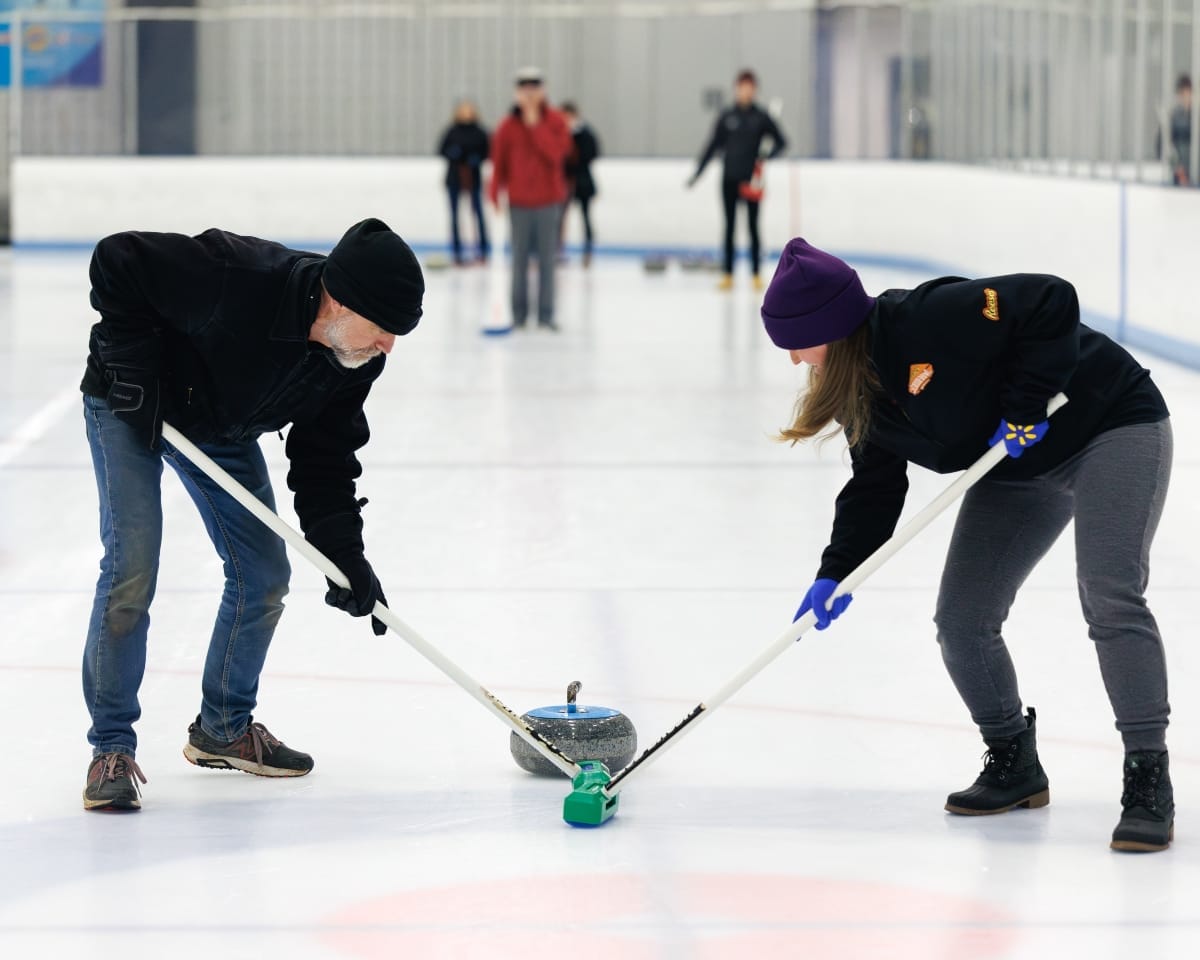

The XXV Winter Olympics concluded this February in Italy, and one of the most interesting sports, and perhaps least understood, was curling. However, the Jones Center in Northwest Arkansas has been home to a handful of curling fans for over 25 years. With the Olympics now wrapped up, it was the perfect time to learn a little more about how the sport arrived in the state.
The Scots invented curling in the 16th century by sliding stones across frozen lakes. Curling stones today are still quarried in only two locations, Ailsa Craig, Scotland and Trefor, Wales. The granite found in Ailsa Craig is unique; its durability prevents curling stones from chipping or breaking when they collide during a game. Other granites and materials have tried to recreate the strength of this Scottish granite, but nothing stands up to the Scottish granite’s strength.
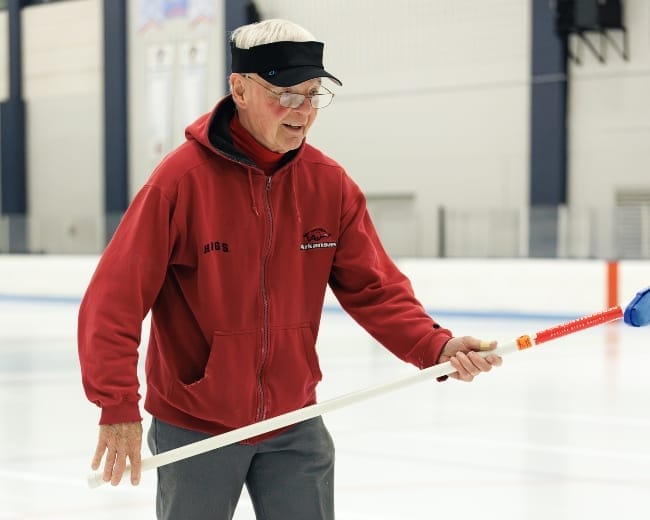
Mark Curtis grew up in Portage, Wisconsin, a town with barely 10,000 inhabitants, nestled between the Fox and Wisconsin Rivers. The small town has a long history, though. French explorers came to the area first, but it was Scottish settlers who found the land and climate similar to Scotland and decided to call the area home. These settlers brought the tradition of curling with them.
Wisconsin was perfect for the sport with its many lakes and cold winters. Of course, now games are mainly played in ice arenas rather than on frozen lakes. When Mark Curtis was a toddler, he remembers watching his father and grandfather curl, and he joined a team at the age of 12, when he was eligible to play alongside his father. Curling is so popular in Wisconsin that it is a high school sport. “There were five curling clubs within 20 minutes of where I lived,” Curtis says.
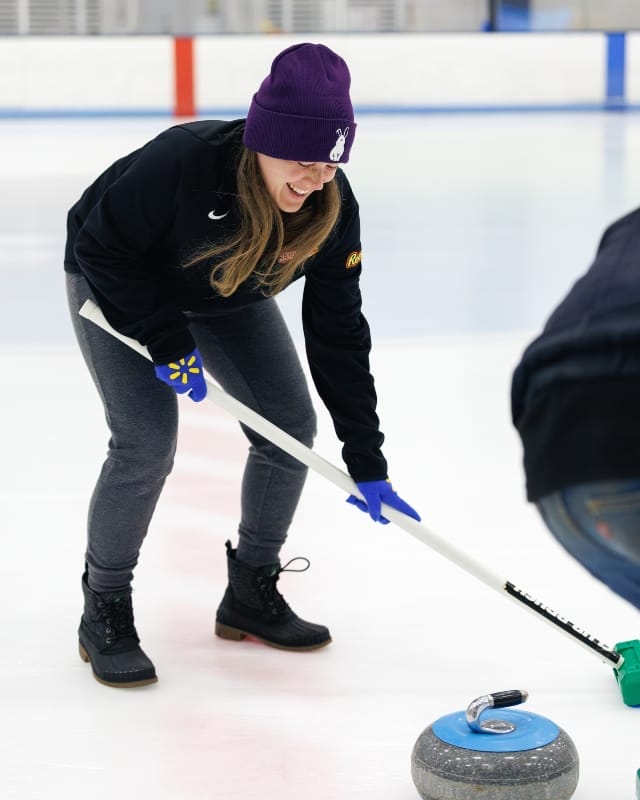
Although he played basketball in high school, Curtis continued to curl whenever and wherever he could. He met a girl from Elkins, Arkansas, while working in Chicago. Susan turned out to be the one, and she learned to curl as well. The Curtises attended many bonspiels, the term for a curling tournament. Susan Curtis got so good that she curled for the U.S. Women’s Senior Curling Team in the World Seniors Tournament and won at the senior level three times.
Mark Curtis even took his curling stones with him when he lived in Guam. “There was barely enough ice in Guam for a drink, let alone curling,” he says. When they decided to retire, Susan wanted to be close to her family’s farm outside of Elkins, so they came to Northwest Arkansas. The Jones Center had opened only a few years before, and it had two curling sheets painted on it. A curling sheet is the rectangular area of ice where curlers push their stones towards the target, four concentric circles that the curlers aim for. A stone must at least touch the outside of the first circle to be in scoring position.

As Mark told his wife, “If they’ve got ice, I can live there.” He and Susan joined a small community of curlers at the Jones Center made up of retired seniors from Bella Vista who were all originally from further north and missed playing the game.
The Northwest Arkansas Curling Club built slowly. They were able to get some older curling stones from a club in Kansas City that had lost its ice time. This is important, as a set of curling stones costs, on average, $10,000. While stones can last a long time, the stones Curtis now has have been in use for 40 to 50 years and are near the end of their life.
The Curtises were the younger players on the block at the curling club for a while, and Mark got into teaching the game to newcomers. However, finding consistent ice time for the curling club has been a problem. The club has played on Sunday mornings but has found it hard to gather people beyond a few dedicated curlers. When they moved to Sunday afternoons, numbers increased, and Mark often found himself teaching the game to new people each week. They took groups from Northwest Arkansas to bonspiels, extending the social circle beyond a small area. Bonspiels often include food and drinks in their entry fees, which makes the weekends fun for everyone, whether they advance further in the tournament or not.

Ice time at the Jones Center has become in demand. The University of Arkansas now has two men’s hockey teams and a women’s team. The Jones Center runs a full schedule of youth league hockey and an adult league, as well as figure skating classes and programs and public skating sessions. The center recently installed new ice in the arena that includes four curling sheets instead of two. “We used to draw a third sheet on the ice with markers if we needed an extra sheet for teaching,” Curtis says. Now the club has plenty of sheets, but finding time to play and new players to carry the club forward is a little more difficult.
This year, the NWA Curling Club meets at 8:45 on Saturday evenings and curls for two hours. The cost is 10 dollars, which covers the ice time each player uses. Mark is available to teach anyone the game and enjoys sharing his knowledge with new players. He also teaches curling to small groups, which can be arranged in advance with the Jones Center. He has led team-building for corporations, and curling is always included in the Jones Center’s Corporate Games, a spring event where businesses enter teams to compete in fun competitions.
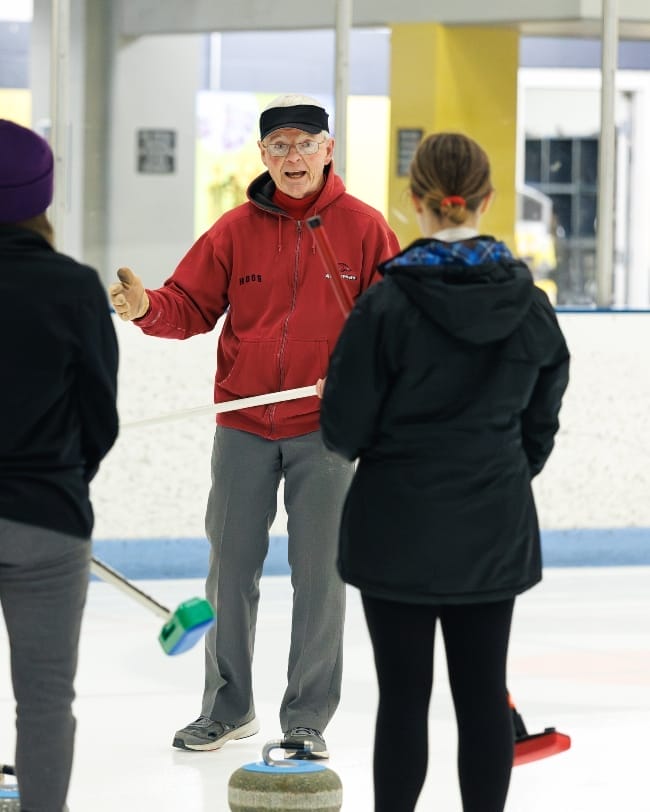
The Winter Olympics are always a fun event to watch, but those in Northwest Arkansas can also experience the fun of curling, too. Mark Curtis encourages everyone to come try the game—but dress in warm casual clothes (no jeans) and flat, rubber-soled shoes to use on the ice. No skating abilities are required for this ice sport. Those who come to learn can pick up the basics quickly and start enjoying the game. The NWA Curling Club meets every Saturday evening at the Jones Center in Springdale from September through March.
Photo credit: Ryan Coody. All photos are from the Northwest Arkansas Curling Club and used with permission.


We do the work.
You check your email.
Sign up for our weekly e-news.
Get stories sent straight to your inbox!


Like this story? Read more from Kimberly Mitchell
Arkansas is a state that loves its sports. While football, basketball,...
Arkansas has hosted its share of presidential visits since it became a...
The Razorbacks are famous across Arkansas and beyond. Many sports fans...
Join the Conversation
Leave a Comment