







Uh oh...
It appears that you're using a severely outdated version of Safari on Windows. Many features won't work correctly, and functionality can't be guaranteed. Please try viewing this website in Edge, Mozilla, Chrome, or another modern browser. Sorry for any inconvenience this may have caused!
Read More about this safari issue.

Regardless of your opinion on them, snakes are simply part of life in Arkansas. If you spend any amount of time outdoors, chances are you’ve crossed paths with one or will eventually. While venomous snakebites are relatively rare, they do happen. According to the Centers for Disease Control and Prevention, Arkansas sees just over 300 venomous snakebites each year. Knowing what to do in that moment can make a significant difference in both recovery and long-term outcomes.
Here’s the tricky part. Even though bites happen every year, most people, including many medical providers, don’t encounter them often. Snakebite treatment isn’t something the average doctor deals with regularly, and guidance has changed over time. That means the information you receive in an emergency situation may not always reflect the most current best practices.
One of the most reliable resources available is National Snakebite Support, a nonprofit dedicated to connecting snakebite victims and medical providers with evidence-based care. Their network includes experts who actively guide treatment in real time through their Facebook group. Their team includes Dr. Spencer Greene, MD, director of toxicology at HCA Houston Healthcare Kingwood, a board-certified emergency physician and medical toxicologist, and one of the country’s leading authorities on snakebite treatment. He and the NSS team regularly assist with active cases, helping ensure patients receive the most current and effective care possible and are able to advocate for themselves or their pets.
Their guidance has helped shape much of what follows, offering clear, practical steps for what to do if a person or pet is bitten.

Human Snakebites
Most people aren’t out looking for trouble when they get bitten. In Arkansas, bites usually happen when someone accidentally steps on a snake or reaches where they can’t see, and the snake reacts defensively. If you receive a bite, quick and careful treatment is the key to speedy recovery and to avoiding debilitating complications.
The most important steps following a bite are:
- Get to the hospital as soon as possible. Call 911 or have a friend take you. Do not drive yourself.
- Remove tight clothing and jewelry.
- Elevate the affected area ABOVE heart level. (This is the most argued step by individuals and healthcare professionals who don’t have up-to-date training.)
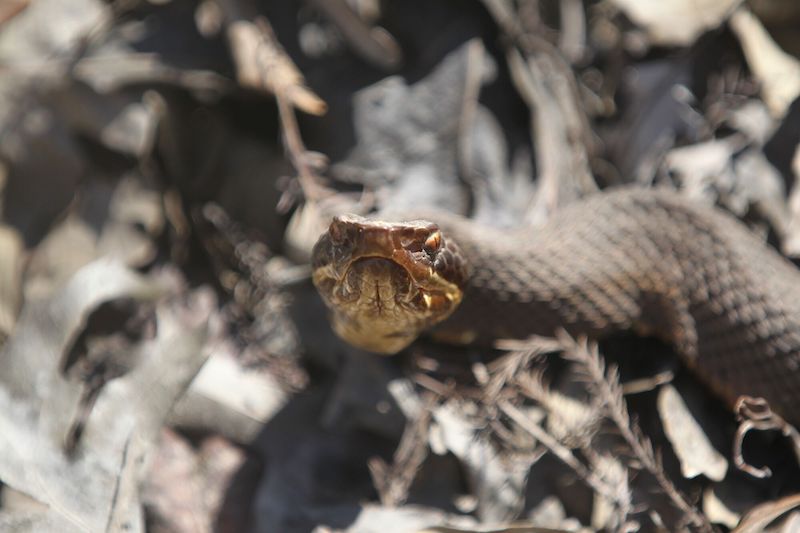
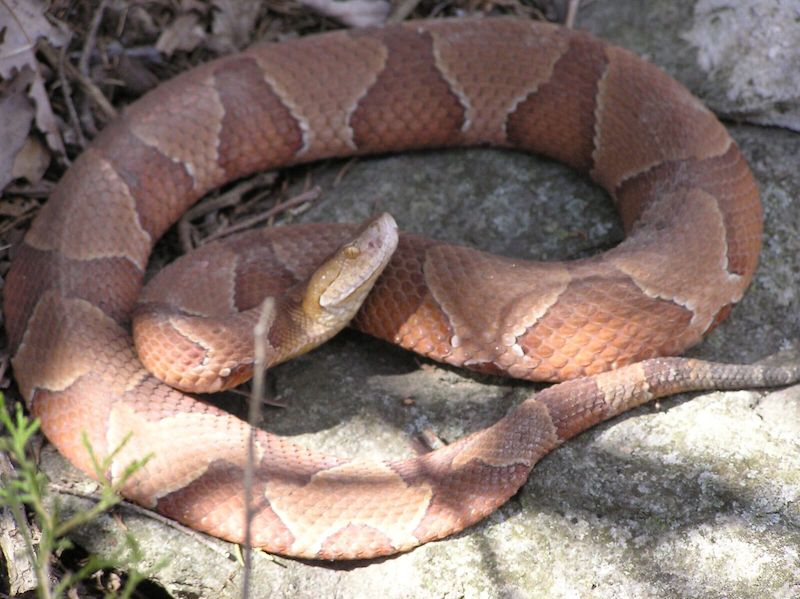
- Take a photo of the snake if you can do it safely. DO NOT bring the snake with you. NOTE: You do not need to identify the snake in order to receive antivenom. CroFab and Anavip are both FDA-approved to treat all North American pit vipers. Pit vipers include rattlesnakes, copperheads and cottonmouths (aka water moccasins).
- DO NOT do any of the following: tourniquets, lymphatic bandage, pressure immobilization, cut and suck, extraction device, electrical stimulation or packing the extremity in ice.
Once at the hospital:
- Connect with National Snakebite Support for real-time guidance from snakebite experts.
- Keep the affected extremity elevated. (Again, this is the most argued step, but research shows elevation is the best position.)
- Make sure they check the following laboratory tests: CBC, BMP, PT/INR, fibrinogen, CK.
- Ask the hospital what their indications for antivenom are. Generally speaking, antivenom is indicated if:
- Significant or progressive local tissue damage, such as tenderness and swelling that crosses one major joint or hemorrhagic bleb occurs
- Hematologic toxicity indicates PT >15s, fibrinogen <150 mg/dL, platelets <150K/µL
- Systemic toxicity indicates hypotension, airway swelling, and neurological toxicity
- If you do not feel you’re getting appropriate care, advocate for yourself. Request that they involve an expert. If necessary, request transfer to a more appropriate facility.
- Do not agree to prophylactic antibiotics or prophylactic surgical intervention.

Animal/Pet Snakebites
Dealing with a pet that has been bitten by a snake can be particularly concerning because they can’t speak for themselves. As with humans, swift care is always the most beneficial and effective.
- Distance yourself and your pet from the snake. Do NOT endanger yourself by getting within striking range of the snake in order to catch your pet. If you get bitten, you will not be able to help your pet.
- If you can do so safely, take a photo of the snake. ID is not required for proper treatment.
- Do not attempt to capture, kill, or transport the snake. Interacting with a defensive snake increases the likelihood of you being envenomated.
- Remove collars, leashes, harnesses or anything constricting in areas where the bite or swelling is present.
- Avoid excitement or strenuous activity to the best of your ability.
- Do not administer any medication, especially NSAIDs (Carprofen, Rimadyl, Meloxicam), as these increase bleeding tendencies and may cause kidney injury.
- Head immediately to the emergency vet. Call ahead to confirm antivenom is stocked. Snakebites are medical emergencies and there are NO effective home remedies.
Pet In-Hospital Guidelines
- Discuss the treatment plan with your vet and reference the In-Hospital Management guide.
- Labs are necessary to monitor the progression or regression of the venom effect. Labs to request will be CBC, chemistry, PCV/ts to assess for hemolysis, PT/PTT, and a blood film to count/confirm platelets and look for echinocytes.
- Antivenom, if warranted, non-NSAIDs pain medication, and IV fluids (not subcutaneous fluids) are indicated for envenomation.
- Antivenom is most effective directly following envenomation, but can still provide benefit several days after the bite if venom effects are present.

Snakebite FAQs
How do I know if a snakebite is venomous?
It’s not always obvious right away. Pain and swelling are common early signs, but symptoms can take time to develop. If you’re unsure, treat every bite as potentially venomous and seek medical care.
My doctor or vet thinks it’s a “dry bite.” What does that mean?
A “dry bite” means the snake did not inject venom. This can happen, but it’s not common and not something you can confirm right away. Symptoms from a venomous bite can take time to show up, which is why careful monitoring is still important. Even if a bite is suspected to be dry, medical professionals should observe for several hours and watch for changes before making that call. If swelling, pain, or other symptoms start to develop, treatment plans may change.
What type of snake bite kit should I keep in my hiking pack?
NSS does not recommend suction devices or cutting tools. Research indicates that these can cause more harm than good. Your best course of action is to seek swift medical treatment.
I took Benadryl, so I should be fine, right?
No. Diphenhydramine (Benadryl) does not treat snake venom. It may help with mild allergic reactions, but it will not stop the effects of a venomous bite or prevent tissue damage.
How long do I have to get to the hospital/vet’s office?
As soon as possible. Even if symptoms seem mild at first, they can worsen over time. Don’t wait to “see what happens.” If seeking veterinary care after hours, contact an after-hours clinic for emergency care.
How long do I have to get antivenom?
There isn’t a strict “cutoff” time. Antivenom can still be effective even hours after a bite, but it works best when it’s given sooner rather than later. The most important thing is to get to an emergency room as quickly as possible so doctors can monitor symptoms and decide if and when antivenom is needed.
Are snakebites usually fatal?
No. In the United States, including Arkansas, deaths from snakebites are rare, especially with prompt medical care. Most people recover, though some may have a longer healing process. For pets, the situation can be a little more serious because they are often bitten in the face or neck, which can lead to restricted airways due to rapid swelling.
Snakebite Medical Care in Arkansas
When it comes to snakebite care in Arkansas, most hospitals are equipped to begin treatment and coordinate care, even if they don’t see snakebites often. Larger facilities, especially in cities like Little Rock, Fayetteville and Jonesboro, are more likely to have antivenom readily available or quick access to it. That said, smaller and rural hospitals can still provide critical early care and consult with specialists as needed, so the priority is always getting to the nearest emergency room as quickly as possible. The same idea applies to veterinary care. Many full-service and emergency vets across Arkansas are familiar with snakebite treatment, especially in rural areas, and some keep antivenom on hand. If your pet is bitten, head to the closest veterinary clinic or emergency animal hospital right away, rather than trying to find the “perfect” location. If you are overly concerned about your pets, you can contact local veterinarians to determine which ones keep antivenom on hand.
Photos provided by Mike Wintroath of Arkansas Game and Fish unless otherwise noted.


We do the work.
You check your email.
Sign up for our weekly e-news.
Get stories sent straight to your inbox!

Like this story? Read more from Julie Kohl
The teacher in me is always looking for ways to sneak a little learning...
Walk through almost any old cemetery in Arkansas and it is easy to focus...
Tennessee and Mississippi get most of the attention when people talk...
Join the Conversation
Leave a Comment