It appears that you're using a severely outdated version of Safari on Windows. Many features won't work correctly, and functionality can't be guaranteed. Please try viewing this website in Edge, Mozilla, Chrome, or another modern browser. Sorry for any inconvenience this may have caused!
An Arkansan’s Guide to Identifying Venomous Snakes
Arkansas is known for a multitude of natural wonders: scenic mountains, diverse forests, glamorous ducks, and… sneaky snakes. Unfortunately, for most people, the Natural State is home to 39 species of snakes, six of which are venomous. As the spring season is upon us, I’m here to help you stay safe around some of our more dangerous serpents.
Know Your Neighbors
As I’ve mentioned, there are six venomous snake species in Arkansas. The first key to keeping yourself and your family safe this spring season is knowing exactly who lives in your neck of the woods.
Copperhead
This fellow is the most common of the six venomous snakes here in Arkansas. Known for its cleverly named copper-colored head and “Hershey’s Kiss” pattern, it blends in with brush piles and leaf litter. Many Arkansans spot these snakes while hiking or walking trails, whether it is in the Ozarks or the Delta.
Cottonmouth
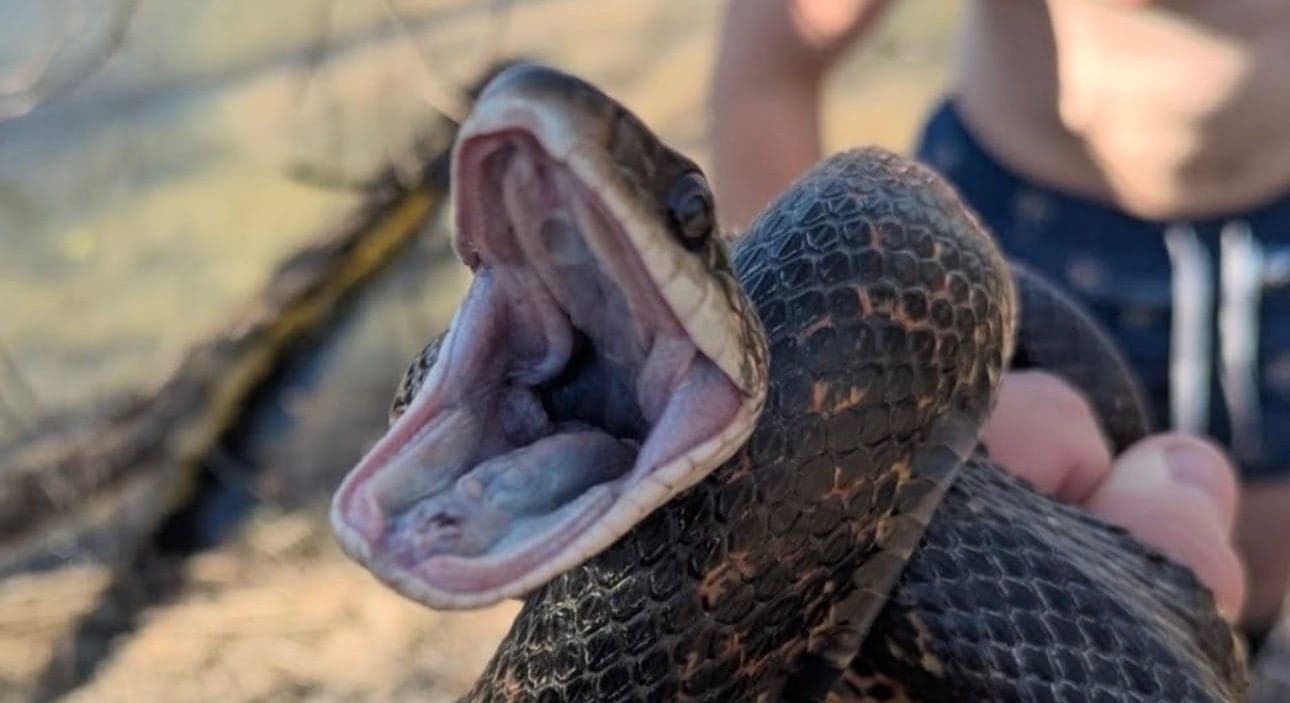
Also known as the Water Moccasin, this critter is also appropriately named. These snakes tend to reside near water, such as swamps and streams, and show off their cotton-white mouths when they feel threatened. They are also identified by their dark, thick bodies. This species should not be confused with the non-venomous watersnake. While they look similar and reside in the same areas, it is vital to notice the differences. Cottonmouths tend to look more muscular and have a triangular head. Watersnakes tend to be slender and have more colorful, well-defined patterns. When in doubt, observe from a safe distance!
Rattlesnake
Whether you like it or not, Arkansas is home to three rattlesnake species: Timber, Western Pygmy and Western Diamondback. While the Western Diamond is native only to the southwestern part of the state, the Timber and Western Pygmy rattlers are found throughout the Natural State. Regardless of the specific species, all of these snakes are characterized by their rattles and hexagonal patterns. If you see one or hear that rattle, stop, remain calm, and back away. It’s better to end the hike early than to find yourself in a hospital.
Coral Snake
“If it’s red on yellow, it’ll kill a fellow. If it’s red on black, he’s a friend of Jack.” This was a common phrase from my grandfather when I was growing up. This rhyme has been used to describe the Texas Coral Snake for years. Despite being the smallest snake on this list, it is the most venomous. Fortunately, it is only native to the southern portion of our state.
Now that you know who to look out for, let’s go over what to do if you encounter one.
Do’s and Don’ts
Contrary to popular belief, snakes are not out to get you. Even for venomous species, those attributes are only used if the snake is threatened or hunting prey. Luckily, we are not on the menu. Here is how to handle an encounter with a serpent during this spring or summer season.
DO Stay Calm: Stumbling upon a snake can come as a surprise. However, if you encounter one, especially if you are bitten, it is vital to stay calm. If a venomous snake bites you and you do not remain calm, your spiked heart rate can spread the venom much faster to your bloodstream.
DO NOT Try to Kill It: Not only is it illegal in Arkansas (unless you are in immediate danger), but attacking a snake is the easiest way to get bitten.
DO Alert Others: If you encounter a snake on the trail, let other hikers know. Not only is it courteous, but it could be the difference between life and death for someone.
DO NOT Try to Catch It: Some venomous snakes look eerily similar to some nonvenomous species. If you aren’t 100% sure which species you’re looking at, it is much wiser to observe from a distance. About one-third of snake bites in the U.S. occur because someone tried to handle or harass the reptile.
DO Seek Medical Attention: If a snake bites you and you suspect it is venomous, seek medical attention immediately. Call 911 or get to the nearest emergency room as soon as possible. If you can, snap a picture so that professionals can correctly identify it.
Believe it or not, snakes are an important part of our state’s environment. They play an important role in balancing the food pyramid. By following these simple tips, you can ensure the safety of yourself and your neighbors. Stay alert, be smart, and watch your step!











Sorry, there were no posts found.
Join the Conversation
Leave a Comment