







Uh oh...
It appears that you're using a severely outdated version of Safari on Windows. Many features won't work correctly, and functionality can't be guaranteed. Please try viewing this website in Edge, Mozilla, Chrome, or another modern browser. Sorry for any inconvenience this may have caused!
Read More about this safari issue.

When you walk down a brick-lined street in a small Arkansas town, have you ever wondered how it still exists? Or what about the old architectural details at the tops of Main Street columns or the 1950s-era soda fountain tiled words at a storefront?
How did the courthouse escape demolition?
Who determined that the opera house was worth restoring?
Why does that cemetery still seem cared for rather than abandoned?
Historic preservation does not happen by accident.
Across Arkansas, many of the places we now explore, photograph, and bring our families to visit exist because someone decided they were worth saving. In many cases, that someone was a woman.

What Is Arkansas Preservation?
Preservation involves protecting and maintaining historic sites so they can be enjoyed by future generations. It differs from conservation, which focuses on natural resources. Preservation safeguards cultural landmarks, including courthouses, cemeteries, town squares, archives, museums, landscapes and even entire communities.
When you visit towns like Washington, Helena, Little Rock, or Fayetteville and enjoy their historic charm, you’re witnessing the results of a well-planned effort.
Arkansas preservation has been shaped by civic leaders, educators, archivists, archaeologists, and community organizers, many of whom are women who recognized historic value long before it became widely acknowledged.
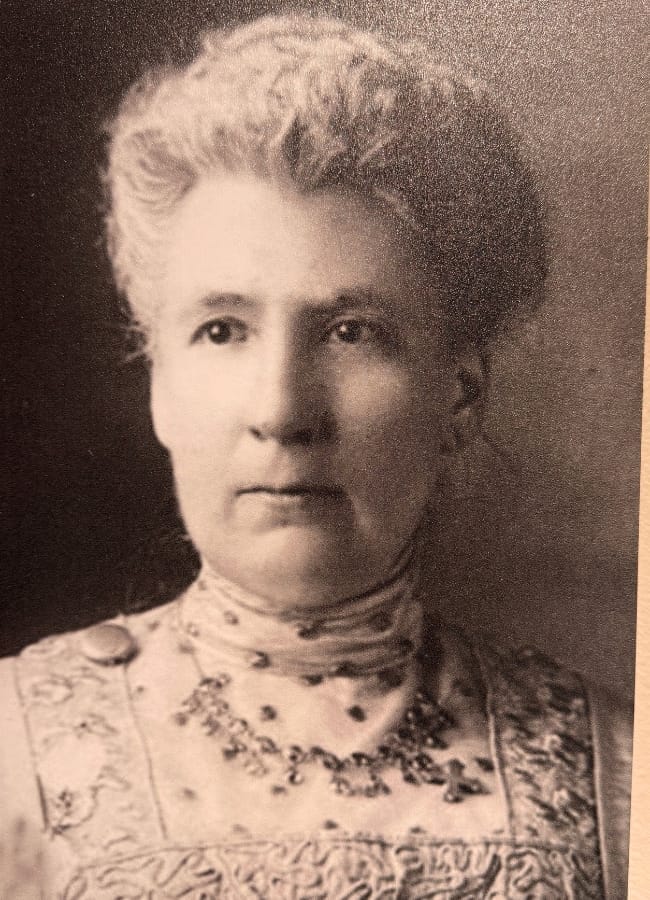
The Women Who Saved Arkansas
Clara Bertha Eno | Little Rock | Historic Advocacy & Civic Reform
Clara Bertha Eno was a civic reformer in early 20th-century Little Rock who believed in thoughtful, deliberate city development. Her advocacy work helped shape conversations about historic awareness and urban planning. While her efforts extended beyond preservation alone, her influence contributed to a growing civic culture that appreciated historical and architectural integrity.
Visit: Wander through the historic neighborhoods near downtown Little Rock and the Capitol district, where early civic reform laid the groundwork for preservation-focused development.
Louise Loughborough | Little Rock | Saving the Old State House
If Arkansas has a preservation pioneer, it is Louise Loughborough. In the early 1900s, she led the effort to save what is now the Old State House Museum from demolition. She organized fundraising campaigns and founded what became the Arkansas Territorial Restoration Commission. Her fundraising and advocacy ensured the structure survived during a time when many historic buildings were being razed in the name of progress.
Visit: Old State House Museum
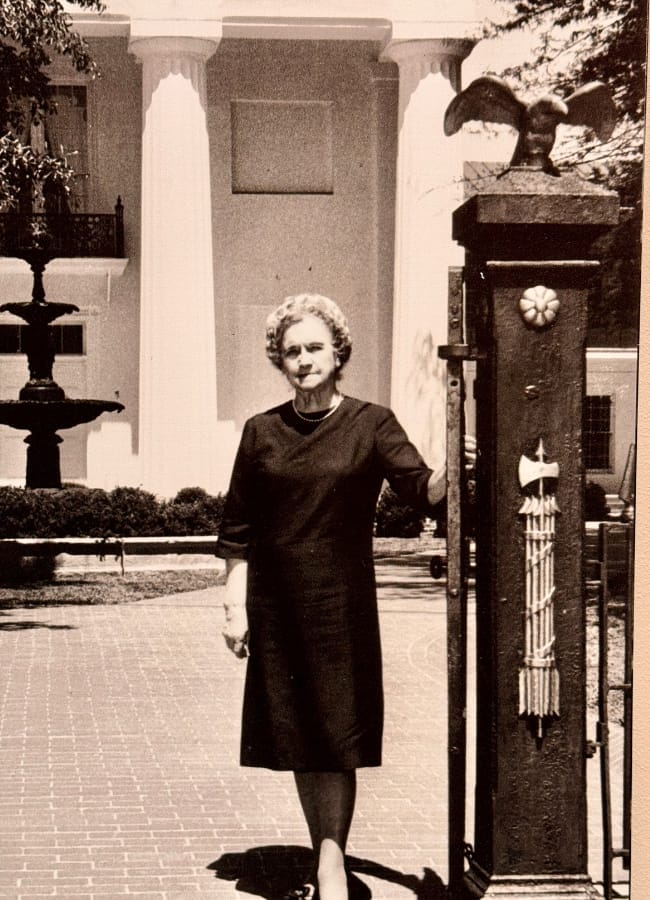
Agnes Loewer | Little Rock | Turning Preservation into a Museum
After saving the Old State House, Agnes Loewer secured its future by lobbying for legislation to officially turn it into a museum, then serving as its first curator for 21 years. She built the museum’s core collections, carefully choosing artifacts that represented Arkansas’s political and cultural history, transforming a preserved building into a lively historical institution. Her efforts gained recognition from the National Trust for Historic Preservation and established the Old State House as a vital part of Arkansas’s heritage.
Visit: the Old State House Museum in downtown Little Rock, where her interpretive vision continues to shape the visitor experience.
Adolphine Fletcher Terry | Little Rock | Cultural & Landscape Preservation
Best known for her civil rights efforts, Adolphine Fletcher Terry also advanced cultural preservation in Little Rock. As a civic reformer, she fought to protect public spaces, historic neighborhoods, and cultural institutions during a time when modernization threatened to erase much of the city’s early character. Her support for thoughtful development and community stewardship helped create a preservation-minded culture in Arkansas’s capital that still influences how historic districts are protected today.
Visit: Take a walk through Little Rock’s historic Quapaw Quarter district, where preservation-minded civic leaders have protected the early homes and streetscapes.

Ruth Trigg Carver | Washington | Saving an Entire Town
In the 1950s, Washington, Arkansas, was quietly declining. Ruth Trigg Carver recognized the town’s historic significance and helped organize the Pioneer Washington Restoration Foundation. Her leadership helped conserve what is now Historic Washington State Park. Thanks to her efforts, visitors can still walk through a restored 19th-century town square that served as the state capital during the Civil War.
Visit: Historic Washington State Park
Mary Fletcher Worthen | Little Rock | Arts & Preservation Advocacy
Mary Fletcher Worthen played a crucial role in supporting Arkansas’s cultural and historic institutions through philanthropy and civic engagement. She backed organizations that protected art, historic collections, and architectural heritage in Little Rock. Her impact went beyond a single building, creating a climate where preservation and the arts were viewed as vital to Arkansas’s identity rather than simple luxuries.
Visit: Attend an event at the Robinson Center Music Hall or the Arkansas Repertory Theater, or wander through the galleries at the Arkansas Museum of Fine Arts.
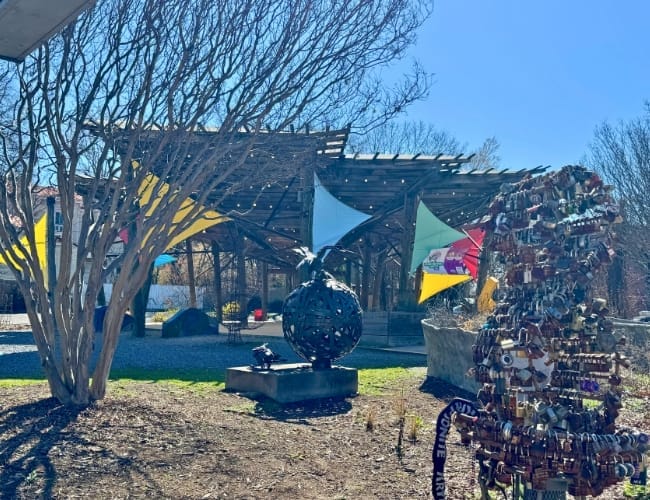
Bernice Wallner | Little Rock | Reviving Urban Historic Space
Bernice Wallner transformed an empty lot in Little Rock’s SoMa district into Bernice Garden, creating a vibrant community space within a historic corridor. Her work highlighted the importance of preserving neighborhood character, encouraging adaptive reuse and reinvestment in nearby historic buildings.
Visit: Bernice Garden in Little Rock’s SoMa district.
Dr. Margaret Wright | Statewide | Forestry & Stewardship Education
Dr. Margaret Wright played a key role in shaping forestry education in Arkansas, impacting generations of land stewards. While her work emphasized sustainable forestry, it also helped foster a culture of environmental responsibility that overlaps with the preservation of Arkansas landscapes.
Visit: Drive through the Ouachita National Forest or Ozark National Forest, where sustainable forestry practices help protect Arkansas’s working forests.
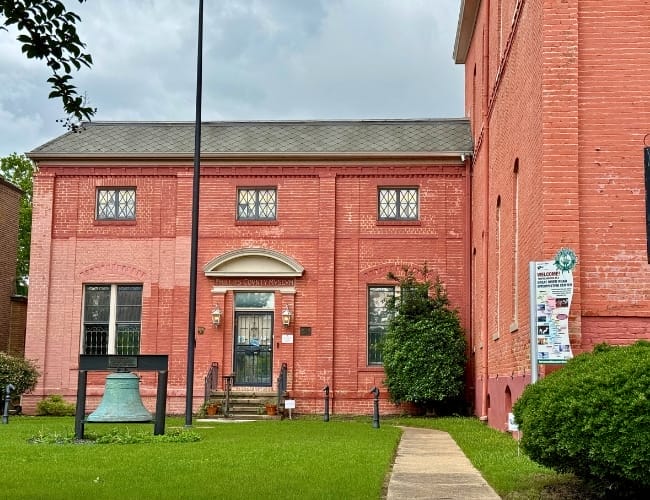
Frances S. “Fran” Toney | Helena | Founding the Phillips County Museum
Frances S. “Fran” Toney helped organize the Phillips County Historical Society and played a key role in founding the Phillips County Museum in Helena during the 1960s. At a time when river-era artifacts, Civil War materials, and Delta family records were being discarded or lost, she recognized their importance and established a permanent space to safeguard them. The museum is one of the oldest continuously operating county museums in Arkansas and holds thousands of artifacts, from steamboat-era relics to agricultural tools to archival documents, preserving the story of the Arkansas Delta for future generations.
Visit: Phillips County Museum and the Delta Cultural Center.
Mildred Smith | Washington | Founding the Southwest Arkansas Regional Archives
In 1975, Mildred Smith aimed to establish a library in Washington but was encouraged to set up an archive instead. Her efforts led to the founding of the Southwest Arkansas Regional Archives (SARA), now managed by the Arkansas State Archives. Her work safeguarded genealogical records, maps, courthouse documents, and regional history that might otherwise have been lost. Over the years, other women continued to lead SARA, broadening its collections and securing long-term preservation.
Visit: The 1874 Hempstead County Courthouse in Historic Washington and the official SARA offices.
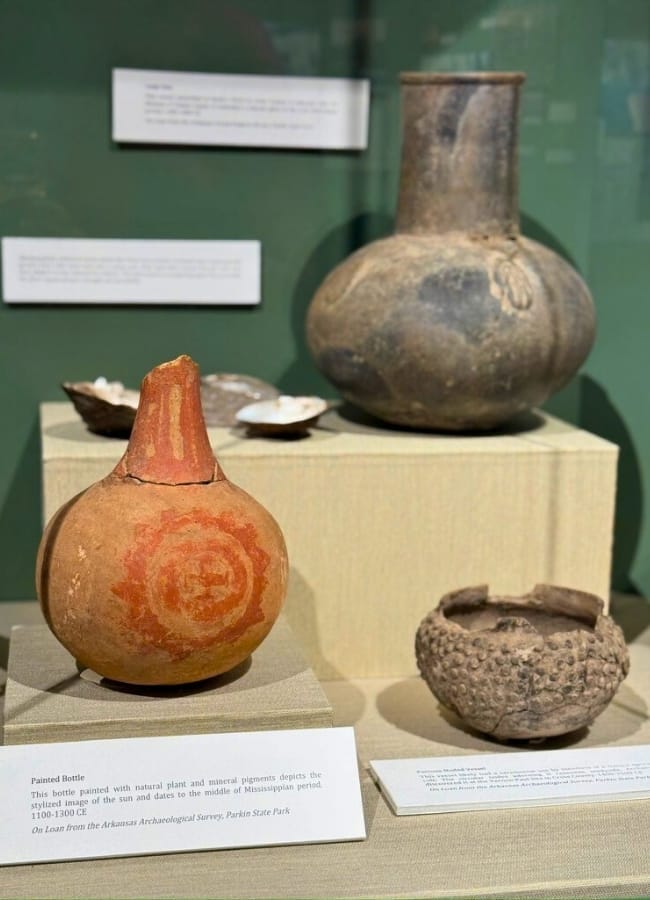
Dr. Ann Early | Parkin | Archaeological Preservation
Through her work with the Arkansas Archeological Survey, Dr. Ann Early has helped preserve some of Arkansas’s most significant archaeological sites. Her research and leadership have connected Arkansans to Indigenous Mississippian-era heritage, especially through her efforts at Parkin Archeological State Park. Archaeological preservation has a special significance in Arkansas, where ancient mound sites and early settlements reveal thousands of years of history.
Visit: Parkin Archeological State Park
Dr. Ruth Hawkins | Statewide | Historic Rehabilitation & Revitalization
Dr. Ruth Anne Hawkins has been one of the most influential preservation leaders in modern Arkansas, specializing in adaptive reuse and historic rehabilitation. One of her most high-profile projects was the restoration and transformation of Johnny Cash’s boyhood home in Dyess into a preserved historic site open to the public. Her leadership helped secure funding, coordinate restoration efforts, and strengthen Arkansas’s dedication to preserving culturally significant landmarks.
Visit: Johnny Cash Boyhood Home and the A-State Historic Preservation Sites
Next time you visit Little Rock’s Old State House, walk through Washington’s courthouse square, explore Helena’s museums, arrive at a historic delta destination, or pass by a restored downtown facade, you might see it with fresh eyes, knowing they were preserved by Arkansas women.
Preservation is rarely dramatic. It is often patient. Persistent. Local.


We do the work.
You check your email.
Sign up for our weekly e-news.
Get stories sent straight to your inbox!


Like this story? Read more from Keisha Pittman McKinney
Visitors to the recent Jonquil Festival in Washington, Arkansas, got a...
It's officially soup season in Arkansas. After a period of cold weather,...
Stuffing an Easter basket is one of those quiet rites of parenthood....
Join the Conversation
Leave a Comment