







Uh oh...
It appears that you're using a severely outdated version of Safari on Windows. Many features won't work correctly, and functionality can't be guaranteed. Please try viewing this website in Edge, Mozilla, Chrome, or another modern browser. Sorry for any inconvenience this may have caused!
Read More about this safari issue.

I grew up in Vermont, where dairy and maple syrup were the primary agricultural products. Dairy farms were easily tucked into the hills, and maple trees quite literally grew everywhere. Fields of various crops were not quite as common, so the moment I first drove into Arkansas, it was evident that agriculture shapes so much of life here. That first sight of fields full of corn, cotton and soybeans was fascinating. Since then, I have loved those tall green rows that rise across the Delta in early summer. There is something beautiful about cornfields catching the evening light, and corn plays an essential role in many Arkansas communities. With a production value of nearly $400 million in 2024, corn remains one of the most important row crops in Arkansas.
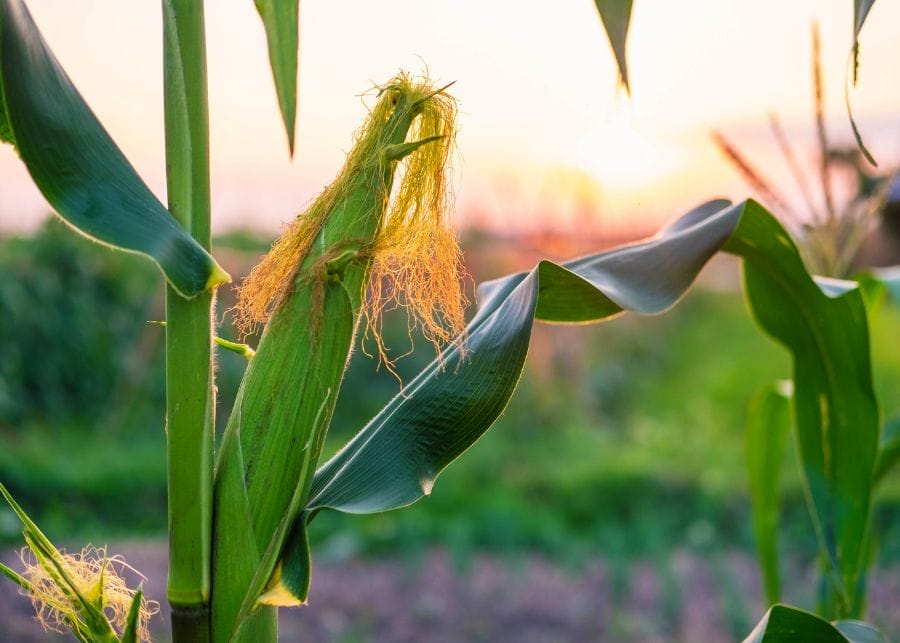
Poultry and livestock farmers once planted small patches of corn specifically for feed. As irrigation expanded and new hybrids increased yields, corn shifted from a homestead staple to a significant commercial crop. Much of the modern expansion occurred when cotton acreage declined and modern irrigation practices provided a steady water supply. Farm families adjusted to markets and made room for a reliable crop that complemented soybeans and rice.
Planting typically begins in March when the soil warms. During the growing season, farmers carefully monitor moisture, pests and nutrient levels. Because our climate brings heat and long stretches without rain, irrigation is a must for almost all Arkansas corn. Pivot systems, polypipe and precision-controlled furrow irrigation help farmers use water wisely. Many fields rely on soil sensors and GPS-guided equipment that allow growers to manage inputs more efficiently than ever before.
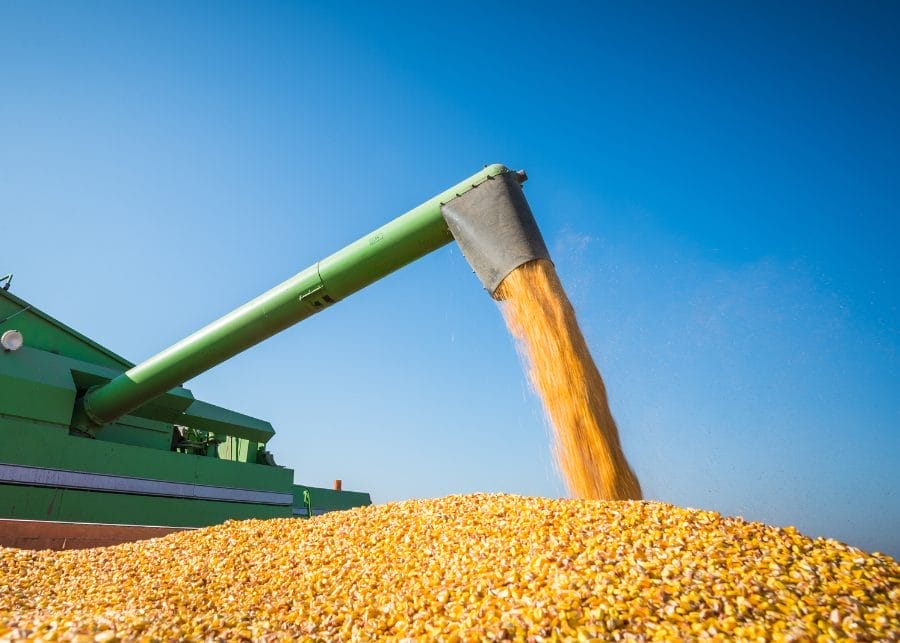
Once the ears mature, harvest usually begins in August or September. Combines shell the kernels from the cob right in the field, then transfers the grain to trucks or grain carts. The corn is delivered to storage bins or dryers, which reduce the moisture level so the grain can be safely stored or shipped.
Corn has steadily grown into one of the most reliable row crops in Arkansas. Farmers plant close to half a million acres each year and typically harvest around 90 million bushels. The bulk of that production comes from the Delta, with Arkansas, Lonoke, Lee, Phillips and Jefferson counties topping the list.
Uses for Corn
Although corn shows up in everything from cereal to crayons, most Arkansas corn (roughly 70%) goes straight to feed mills. With poultry production being another one of the state’s largest industries, corn is a vital ingredient in the success of chicken farms. The most common uses for Arkansas corn include:
- Animal Feed
- Textiles, Glues/Adhesives
- Ethanol & Fuel
- Cooking Oils & Baking Mixes
- Paper Products & Tires
- Industrial & Alcoholic Beverages

While most Arkansas corn is used for poultry feed, a portion is grown specifically for people, including white corn used for cornmeal, tortillas, chips and masa, as well as food-grade yellow corn used in cereals, grits and snack products. Several processors in the region buy Arkansas white corn for milling, and some local growers raise specialty varieties for niche markets.
Sweet corn plays a smaller, but still meaningful, role in Arkansas agriculture. Unlike the large tens of thousands of acres dedicated to field corn, sweet corn is grown mainly for fresh local markets, roadside stands, farmers’ markets and smaller-scale producers. Because it matures faster and is harvested when kernels are in the “milk stage,” it demands more careful timing, labor and handling.
Grain Sorghum
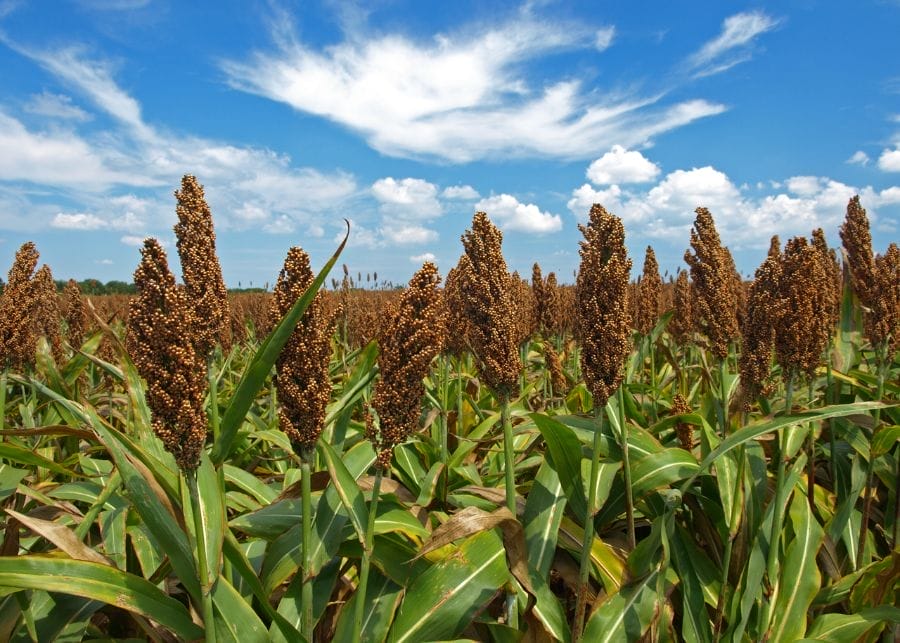
You may not realize that grain sorghum, often called milo here in Arkansas, is an important part of the picture too. At a glance, sorghum resembles corn. In fact, the plants are closely related. The differences are easy to spot once you know what to look for. Sorghum grows shorter and produces a cluster of small, reddish seeds at the top of each stalk, rather than ears hidden in husks.
Sorghum is used for many of the same purposes as corn. Both are warm-season grasses that thrive in our climate, and both serve as key ingredients in livestock and poultry feed. Sorghum has a reputation for being more drought-tolerant, making it valuable in fields with limited irrigation or during seasons when water is scarce. It also fits naturally into crop rotations that include corn, rice and soybeans, helping farmers manage soil health and pests.
Corn and Sorghum by the Numbers
- A single acre of Arkansas corn typically produces enough grain to feed thousands of chickens.
- A bushel of corn weighs 56 pounds and can be turned into more than 4,000 different products.
- 70% of Arkansas corn is used for poultry feed.
- Corn acreage has increased by 6.3% annually.
- Annual corn production value equals $394,944,000 (2024).
- Annual sorghum production value equals $5,050,000 (2024).
Whether you eat fresh corn, purchase products made with corn, or use it to feed your backyard flock, corn plays a vital role in our everyday lives. For more Arkansas farming facts and information, visit the Arkansas Farm Bureau.
You may also enjoy these articles:
Arkansas Cotton
Arkansas Farm Trail Passport
Celebrating Sorghum
Arkansas Crops


We do the work.
You check your email.
Sign up for our weekly e-news.
Get stories sent straight to your inbox!


Like this story? Read more from Julie Kohl
Tornado season is part of life in Arkansas, and the time to think about...
One of my favorite family traditions is going for night walks. We tend to...
I've got spring fever, and watching birds fill the sky as they head north...
Join the Conversation
Leave a Comment