




Uh oh...
It appears that you're using a severely outdated version of Safari on Windows. Many features won't work correctly, and functionality can't be guaranteed. Please try viewing this website in Edge, Mozilla, Chrome, or another modern browser. Sorry for any inconvenience this may have caused!
Read More about this safari issue.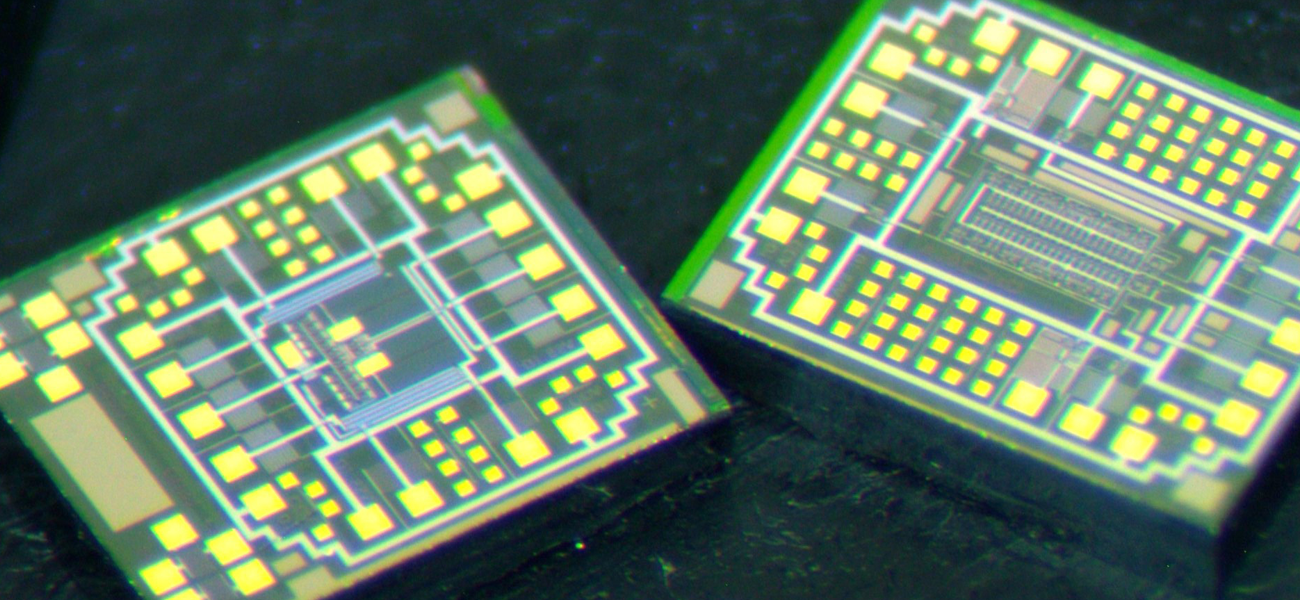

In 1985, Fayetteville-born astronaut Richard Covey packed up the Fayetteville flag, and took it into space while carrying out a mission on the Space Shuttle Discovery.
Since then, we haven’t heard of many pieces of Arkansas making their way past the atmosphere and out into the great beyond. That could soon change, however.
Fayetteville-based company Ozark Integrated Circuits was recently awarded $245,000 in NASA grants to develop an ultraviolet imager and a micro controller that can operate on the 932-degree surface of Venus.
The company, founded in 2011 by locals Matt Francis and Jim Holmes and located at the Arkansas Research and Technology Park, is a semiconductor company that develops integrated circuits for remote sensing that are designed to operate under extreme environment conditions (like, for example, the surface of Venus).
In fact, Ozark Integrated Circuits has already demonstrated the ability to create a circuit that could withstand heats of up to 662 degrees Fahrenheit. Their plan to increase that to the necessary 932-degree threshold includes the use of a new silicon carbide substrate, and lots of experience working with semiconductors.
“Silicon carbide is a semiconductor that is ideally suited for the extreme environments found on Venus,” said Matt Francis, founder and CO of Ozark Integrated Circuits. “We have many years of experience working with this semiconductor fabrication process, developing models and process-design kits specifically for this process.”
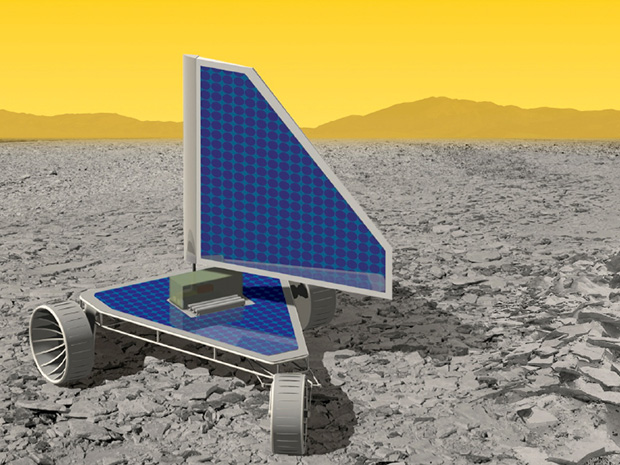
If everything goes well, these new circuits developed in Fayetteville could be incorporated in the overall design of NASA’s proposed Venus Landsailing Rover.


We do the work.
You check your email.
Sign up for our weekly e-news.
Get stories sent straight to your inbox!


Like this story? Read more from Fayetteville Flyer - Dustin Bartholomew
A local celebration of one of the most iconic sandwiches ever created is...
A new all-ages music venue and art space offering a menu of non-alcoholic...
Robert Locke is a music fixture in Arkansas. A longtime artist and...
Join the Conversation
Leave a Comment