






Uh oh...
It appears that you're using a severely outdated version of Safari on Windows. Many features won't work correctly, and functionality can't be guaranteed. Please try viewing this website in Edge, Mozilla, Chrome, or another modern browser. Sorry for any inconvenience this may have caused!
Read More about this safari issue.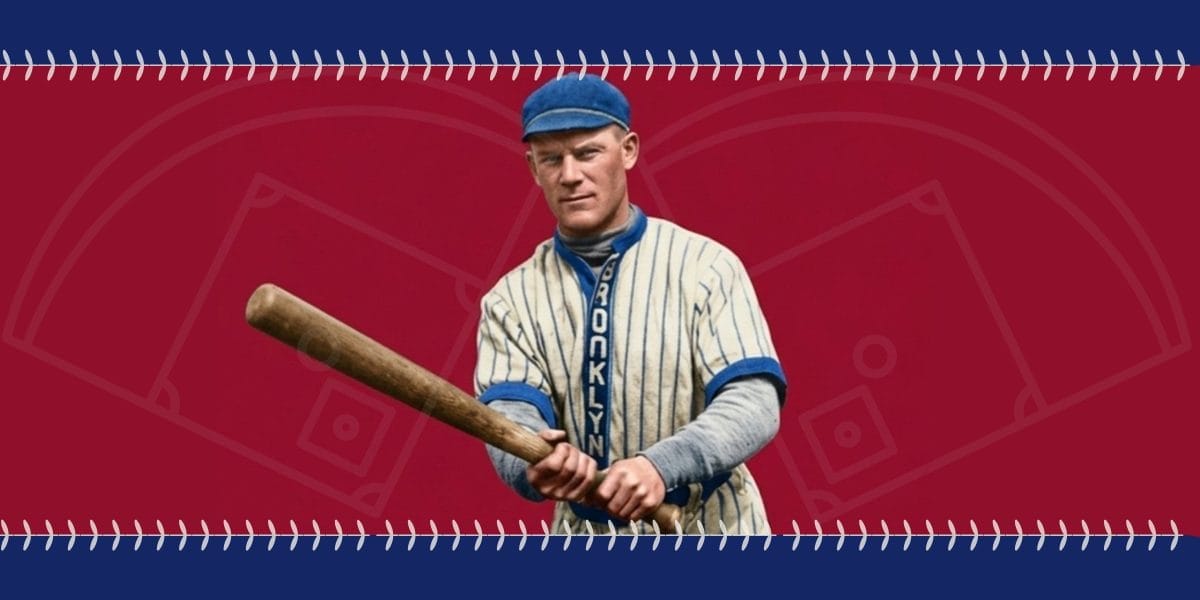

For the first 20 years of professional baseball in Little Rock, Arkansas, there was little to get excited about. After a respectable start in 1901, things became so difficult both on and off the field that, in 1909, the Little Rock Travelers sold their franchise, equipment, and players at what amounted to a “going out of business sale.” It would take the arrival of a feisty little fellow from Ohio to bring some fire to an unmotivated team and win the hearts of a disinterested city. They called him the “Tabasco Kid.” Challenged to bring a little spice to a dull situation, Norman Elberfeld did just that.
Norman Arthur Elberfeld was born in Pomeroy, Ohio, on April 13, 1875, the second youngest child of German immigrants Philip and Katherine Elberfeld. His birth rank among 11 children earned him the nickname “Kid” from his siblings. Kid Elberfeld never remembered being called anything else.
It is tempting to tell the Elberfeld story by reviewing the confrontational, temper-driven episodes in his life, but Kid Elberfeld’s story deserves more than a superficial “highlight reel” of the Tabasco Kid’s altercations. Little Norman Elberfeld was tough. So tough that men he played against invented words fervent enough to describe the toughest ballplayer they had ever seen.
Elberfeld was also an exceptionally talented player driven by a pervasive conviction that he had to be “more than that.” He had to be something other than a guy who could hit well, throw accurately, and snag hard-hit ground balls headed for the outfield. At 5’7” and 145 pounds, Norman Elberfeld had to prove he was tough enough to play a man’s game, despite looking like a “kid.”
The dirtiest, scrappiest, most pestiferous, most rantankerous [sic], most rambunctious ball player that ever stood on spikes.”
–Terry Simpkins SABR Bio Project
Kid Elberfeld the Player
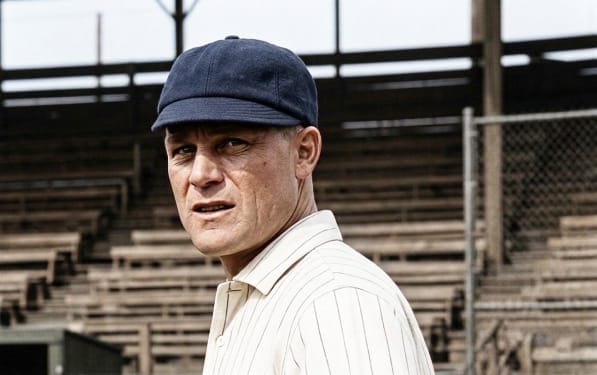
With little interest in education, Kid Elberfeld became a teenage baseball vagabond playing on the back roads of minor league baseball for a few dollars and a room. Fortunately for Elberfeld, he was an outstanding young player consumed by an unbridled competitive spirit.
By 1901, he had worked and fumed his way to a place on the Detroit Tigers in the newly created American League. He had hit well enough to be a regular, and his defense was excellent, but much of his attention came from an explosive temper. Suspensions and ejections were common. He was alternately known as Elberfeld the ball player and the simmering volcano that sports writers called the Tabasco Kid. In July, the Detroit Free Press called Elberfeld, “A fine ballplayer, a valuable man, and one of the hardest workers that ever appeared on any field,” but added, “his act is getting old in Detroit.”
In a thirteen-year major league career that included stops in Detroit, New York, and Washington, Elberfeld collected more than 1200 hits and batted a respectable .271. In a less impressive category, more than 100 years after his last big-league game, he remains in the top 20 for career ejections as a player.
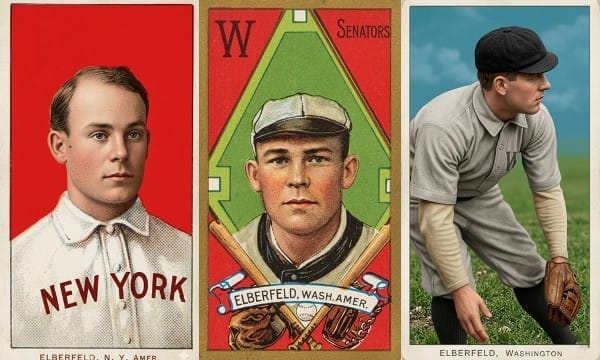
The Tabasco Kid, part of Elberfeld’s nature, featured a litany of incidents that became a curse and a disguised blessing. As he transitioned from player to manager, owners who sought more effort and competitive spirit from their team brought in the Tabasco Kid to add some “seasoning” and motivate their clubhouse.
In 1917, the Little Rock Travelers were one of those teams looking for a new recipe to save a struggling franchise. After reviving the failed Travelers franchise in 1915, the Travs seemed to be in the same losing, poor-attendance situation that had led to failure in 1909. Owner R. G. Allen and his business manager, Ray Winder, made a bold move. They needed an experienced baseball guy to build a new team and a manager with the charisma to spark the imagination of a dormant fan base. How about Kid Elberfeld, the player-manager over at Chattanooga? He was looking for a job, he had an extensive baseball resume, and foremost among his qualifications, he was an “attention getter!”
The move seemed to pay off immediately. The 1918 Travelers challenged for the league lead and were third in attendance when the demands on the American workforce created by World War I ended most of minor league baseball’s season in July, including the Southern Association. The 1919 Travs would again finish second, seven games behind the Atlanta Crackers, but the new decade would bring a long-awaited pennant to Little Rock.
Elberfeld Manages Travs to First Pennant
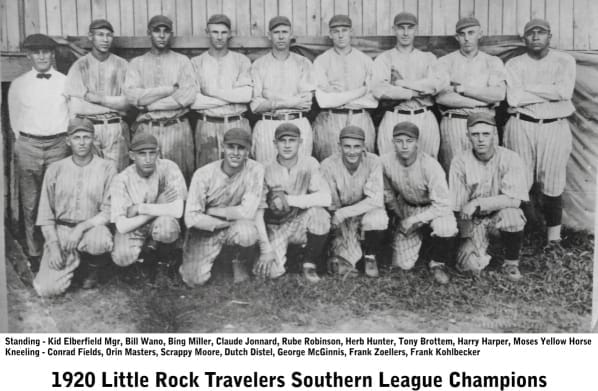
The 1920 Little Rock Travelers were a team for the ages. Second baseman George Distel and catcher Tony Brottem returned for a third year in Little Rock, and a local infielder named William Moore came over from Atlanta to man third base. Moore, known locally as “Scrappy,” would bring a big bat and an even bigger competitive spirit to the lineup.
On a barnstorming trip to Oklahoma, Elberfeld found two Pawnee youngsters who became fan favorites and instant stars on the field. Moses Yellow Horse was a hard-throwing right-hander who joined Rube Robinson to win a combined 47 pitching victories. The other American Indian, first baseman Bill “Chief” Wano, had two outstanding years in Little Rock but never reached the big leagues.
The two key men in the middle of the 1920 Travs lineup were Bing Miller and Harry Harper. Miller would later become a star in Major League Baseball and play on two World Series Championship teams in Philadelphia. Harper led the Southern Association in hits and doubles in 1920, but he never played in a league higher than Class A.

The Travelers won the pennant by two and a half games over New Orleans and set an attendance record for a Little Rock team that lasted 30 years. The 1920 season would be Norman Elberfeld’s finest hour in baseball, but the success was short-lived. In the reality of minor league baseball during the first 25 years of the 20th century, rosters were a fragile collection of failed major leaguers on the way down and big-league prospects on the way to the major leagues. In 1920, that fluid situation produced a championship team in Little Rock, which began to evaporate in 1921.
Elberfeld’s celebrity status in Little Rock was fleeting. His confrontations with umpires and opponents were humorous in 1920, but annoying as the team began to slide down the standings. After dropping to fourth place in 1921 and 1922, the Travs finished last in 1923 and 1924. On October 1, 1924, in the face of a probable firing, Kid Elberfeld resigned.
After pro baseball, Elberfeld ran or participated in baseball schools throughout the South. He also began managing another kind of professional team, a barnstorming team made up of his five daughters. After successful athletic careers in various amateur sports, from boxing to swimming, the “Elberfeld Sisters” took on all comers as a traveling basketball team.
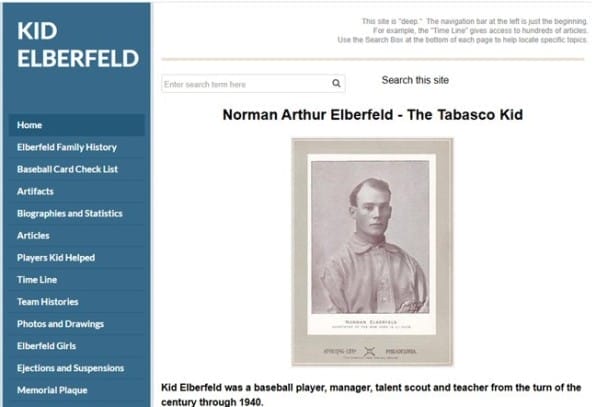
On January 13, 1944, Elberfeld died of pneumonia at Erlanger Hospital in Chattanooga, Tennessee. He was buried in Chattanooga Memorial Park. The Elberfeld family maintains a website in honor of Norman Arthur Elberfeld.
Photos courtesy of the Elberfeld family and the Arkansas Travelers


We do the work.
You check your email.
Sign up for our weekly e-news.
Get stories sent straight to your inbox!


Like this story? Read more from Jim Yeager
In 1942, the Americans Tom Brokaw would later celebrate as our...
In 1920, the winter days between Christmas and New Year’s Day promised...
The 1951 baseball season arrived in Little Rock with little cause for...
Join the Conversation
Leave a Comment