





Uh oh...
It appears that you're using a severely outdated version of Safari on Windows. Many features won't work correctly, and functionality can't be guaranteed. Please try viewing this website in Edge, Mozilla, Chrome, or another modern browser. Sorry for any inconvenience this may have caused!
Read More about this safari issue.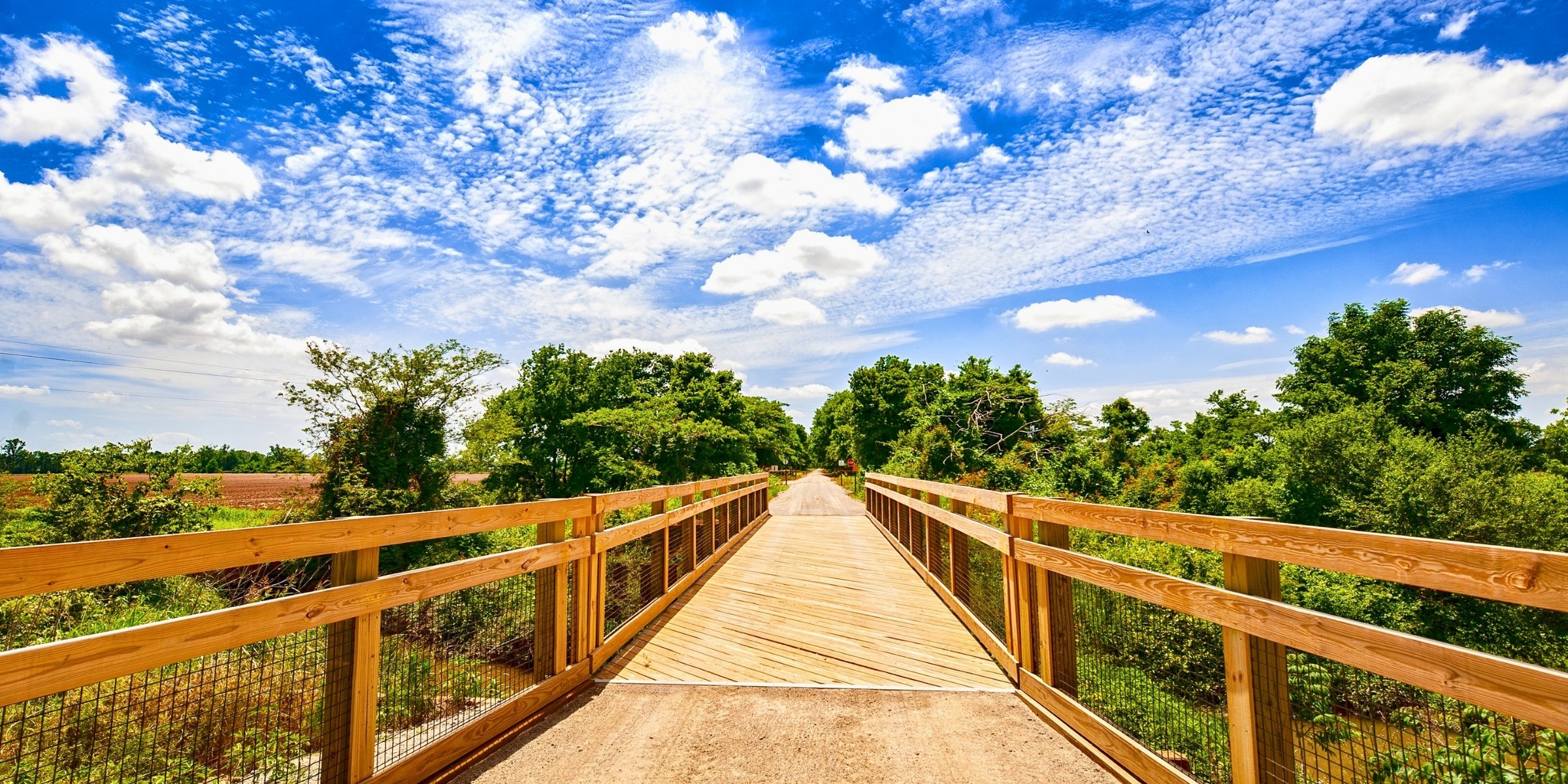

Most of us experience the Arkansas Delta through a windshield. We drive past fields that stretch toward the horizon, cross rivers and bayous and watch small towns appear and disappear along the highway. But another way to experience this part of Arkansas moves much more slowly.
At Delta Heritage Trail State Park, you can walk beneath a tree canopy, pedal beside working farmland, listen for frogs calling from an irrigated rice field, and travel across bridges that once carried trains through some of Arkansas’ most remote landscapes.
When completed later this year, the Delta Heritage Trail will span 84.5 miles across the Arkansas Delta, from Lexa to Arkansas City. But don’t let that number intimidate you. With 11 trailheads and distinct sections to explore, you don’t have to tackle this adventure all at once. In fact, you might find that going slowly is the best way to experience it.
From Railroad Tracks to Arkansas State Park
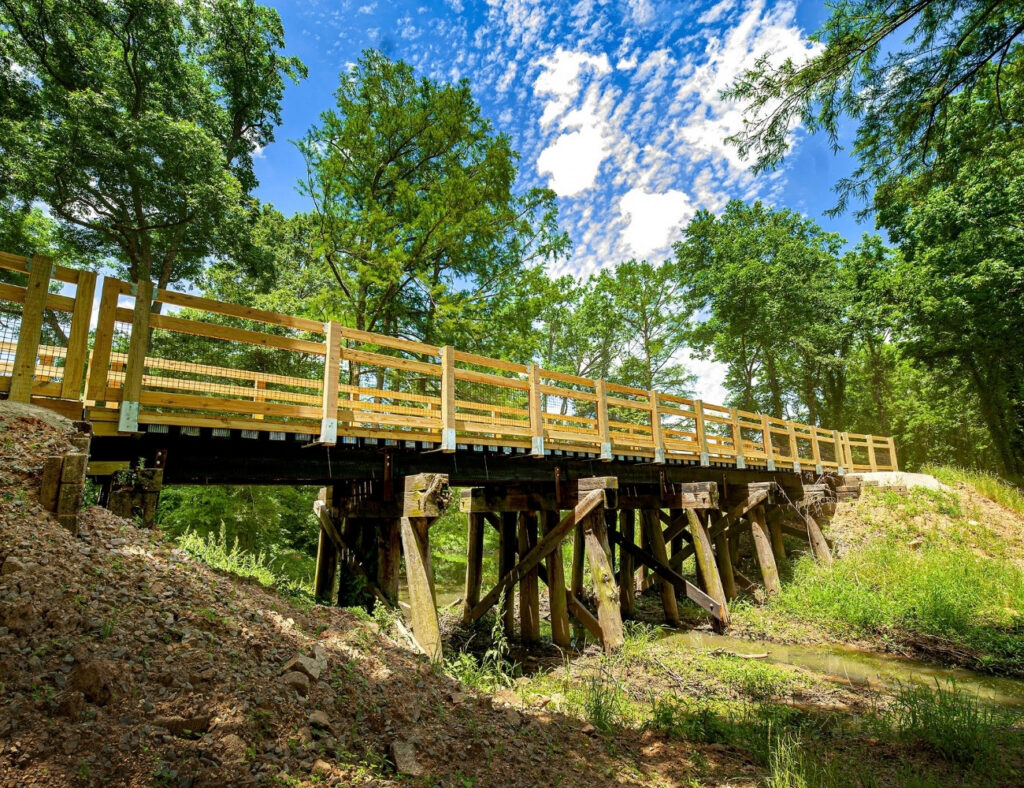
The story of Delta Heritage Trail State Park begins long before people rode bicycles along this route. Much of today’s trail follows a former railroad corridor once used by passenger trains, including the Delta Eagle. The railroad connected small Delta communities to a much larger transportation network. Passengers could eventually travel to places like Memphis, St. Louis, Chicago and New Orleans, but people weren’t the only things moving along the tracks.
Mail and newspapers arrived by train. Cotton and timber were shipped by rail. Park records also document smaller shipments of pecans, live fish, animal skins, and furs. For this section of the state, the rail line was a vital lifeline and economic link to the rest of the Mid-South region; their connection to the outside world.
After the rail line was abandoned, Union Pacific Corporation donated the corridor to the state of Arkansas in 1992 through the national Rails-to-Trails program. Arkansas State Parks began developing the trail in phases, with a significant boost from a $20 million matching grant from the Walton Family Foundation announced in 2020.
Today, that old transportation corridor is connecting communities in a new way. Instead of boarding a train, visitors arrive with bicycles, walking shoes, and cameras, ready to experience the Delta at trail speed.
One Trail, Several Different Deltas
One surprise at Delta Heritage Trail State Park is how much the landscape changes along the route. At the northern end, the trail passes through an agricultural landscape. Depending on the season, visitors might watch fields being planted, see crops growing, or pass farmers in the middle of harvest. In winter, huge flocks of snow geese sometimes gather in the fields.
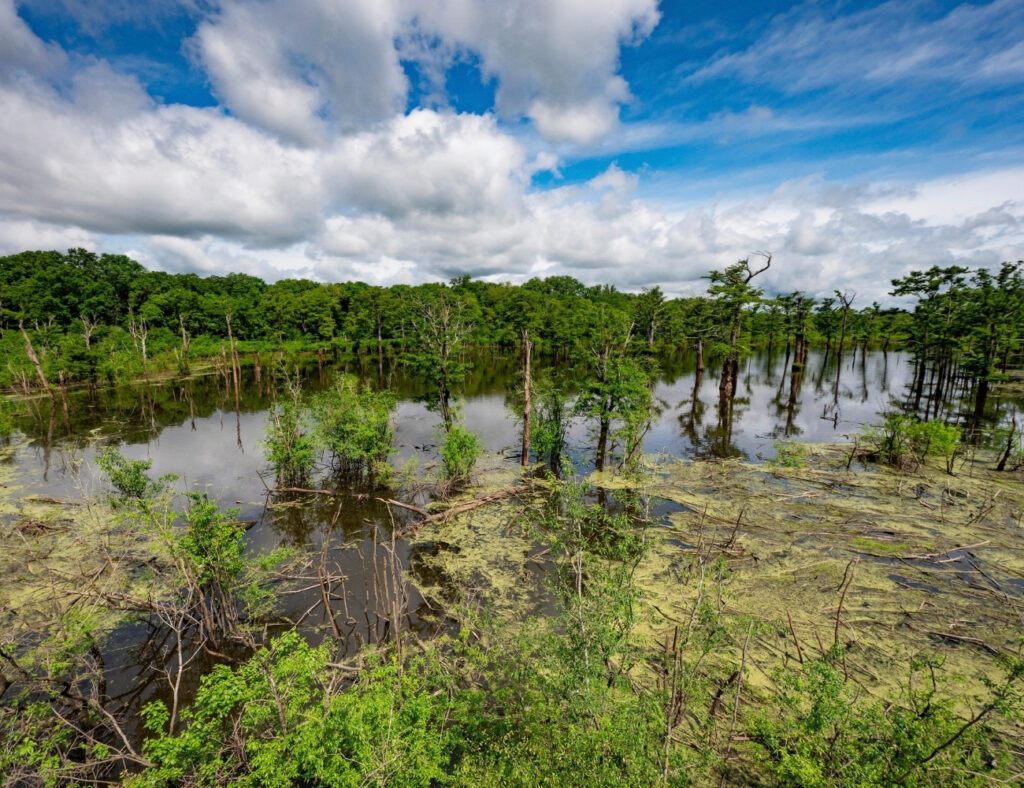
As you move farther along the trail, the experience changes. The old railroad bed passes through bottomland hardwood forests and wetlands. In some places, the elevated rail bed lifts you above the surrounding floodplain, offering wide views of a landscape that can look completely different depending on water levels.
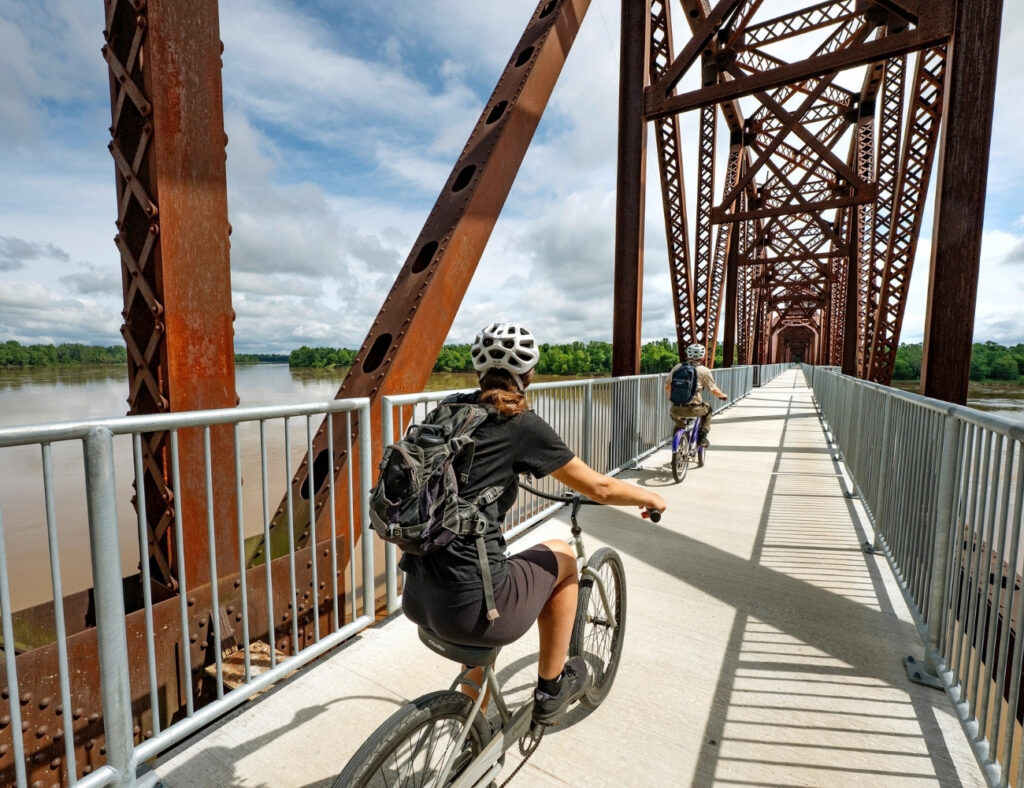
Then there are the bridges. Original railroad bridges were repurposed for trails, including impressive crossings over the Arkansas and White rivers. The Yancopin Bridge offers expansive views of the Arkansas River and the surrounding landscape.
In another section, the trail runs atop the Mississippi River levee. On one side, visitors can see agricultural fields. On the other, the landscape reflects the wetlands and floodplain shaped by the Mississippi River.
It is all the Arkansas Delta, but each section tells the story differently.

You Don’t Have to Travel 84.5 Miles
An 84.5-mile trail might sound like it’s reserved for serious cyclists, but that’s a misconception park staff hope to dispel. There are 11 trailheads throughout Delta Heritage Trail State Park, making it easy to experience the park in smaller sections.
The visitor center at the Barton Trailhead is a good starting point for first-time visitors. It sits near mile marker two, making mileage easy to track. Ride five miles down the trail and return for a 10-mile trip or simply walk as far as you want before turning around.
Cyclists looking for a longer day can ride from Barton toward Lake View or Elaine. Another option is to explore the southern portion of the park, where visitors can make the historic bridges and wetlands the focus of their adventure.
While the midsection is still being completed between several of the historic bridges, visitors can begin at a northern or southern trailhead and make their own route along the path. Walking, running, gravel cycling, birding, and photography all fit naturally here.
Come Without All the Gear
You don’t need a garage full of outdoor gear to enjoy Delta Heritage Trail State Park. The Visitor Center rents bicycles during operating hours, and the park offers interpretive programs year-round. Guided experiences can introduce visitors to parts of the landscape they might otherwise miss, and some kayak programs provide the necessary equipment.
The Barton Trailhead also has primitive tent camping, picnic areas and restrooms.
For photographers, the possibilities change mile after mile. Historic agricultural buildings, old railroad infrastructure, fields, wetlands, rivers, and small Delta communities offer dramatically different subjects.
Birders have just as many reasons to return. Because the trail passes through multiple habitats, the birds change with the landscape and the seasons. Open agricultural areas attract different species than interior forests, while wetlands and lakes offer opportunities to see waterfowl.
The trail may be the common thread, but visitors get to decide what kind of adventure they want to build around it.
No Two Trips Are the Same
Perhaps the most compelling reason for returning to Delta Heritage Trail State Park is that the landscape refuses to stay the same; it’s the nature of the territory. The Delta is always changing!
Water levels rise and fall. Sandbars form along the rivers and vanish after heavy rains. Crops progress from planting to harvest. Migratory birds arrive and depart. Spring brings wildflowers to the trail’s shaded sections. Summer fills the landscape with insects, frogs, and birds. Fall color arrives slowly in the Delta, sometimes not until November. Winter reveals views that summer foliage can hide.
Even the sounds change. Travel slowly enough, and you might hear green tree frogs singing beside an irrigated rice field in summer. Cicadas fill the trees. Birds call from the brush before you spot them. In winter, you might hear a flock of snow geese before rounding a curve and finally seeing thousands gathered in a field.
Those details are easy to miss at highway speed, but on the trail, they become part of the experience.
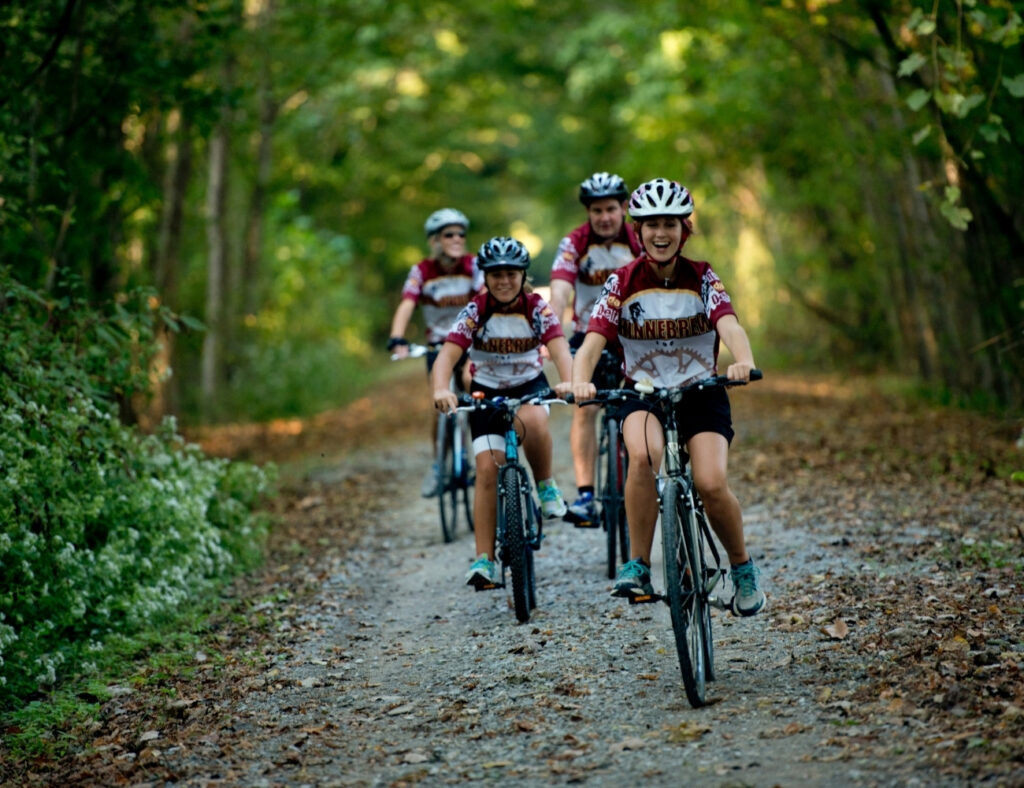
A Trail Connecting Communities Again
The railroad once connected communities such as Lexa, Barton, Lake View, Elaine, Rohwer, and Arkansas City to places far beyond the Delta.
Now the trail is creating another kind of connection that feels eerily similar. Visitors are encouraged to look beyond the trailhead and spend time in the communities along the route. Helena-West Helena, Elaine, and Arkansas City offer opportunities to explore local history, museums, restaurants, and other attractions, turning a few hours on the trail into a longer Delta getaway.
The trail also passes near sites that hold significant pieces of Arkansas history, including the Rohwer Japanese American Relocation Center and the Delta Cultural Center.
That combination of outdoor recreation, community, and history sets Delta Heritage State Park apart from what many visitors picture when they hear “Arkansas State Park.” There isn’t a single mountain overlook or waterfall waiting at the end; the destination is the journey through the Delta itself.
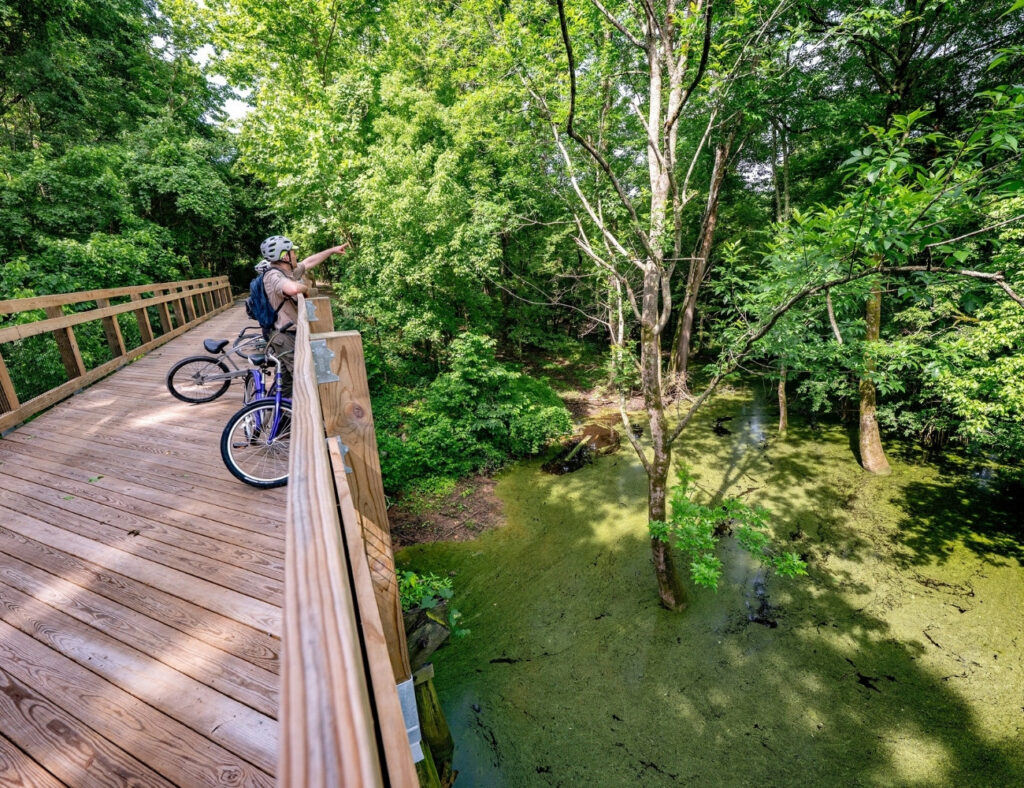
Experience the Delta at Trail Speed
Maybe the magic of Delta Heritage Trail State Park isn’t found at mile zero or mile 84.5. I’m convinced it’s somewhere in between.
It’s the moment you hear frogs calling from a rice field or spot a bird moving through the brush. It’s rolling onto an old railroad bridge and realizing there is nothing around you but water, woods, and sky. Visit often and return. The Delta will tell you a different story every time.
Unless otherwise noted, images in this story are used with permission from the Arkansas Department of Parks, Heritage and Tourism.


We do the work.
You check your email.
Sign up for our weekly e-news.
Get stories sent straight to your inbox!


Like this story? Read more from Keisha Pittman McKinney
Long before Arkansas became a state, Indigenous peoples built...
There is a certain kind of magic when a state park preserves a town...
Across Pine Bluff, the name Saracen is widely known. It appears on a...
Join the Conversation
Leave a Comment