







Uh oh...
It appears that you're using a severely outdated version of Safari on Windows. Many features won't work correctly, and functionality can't be guaranteed. Please try viewing this website in Edge, Mozilla, Chrome, or another modern browser. Sorry for any inconvenience this may have caused!
Read More about this safari issue.

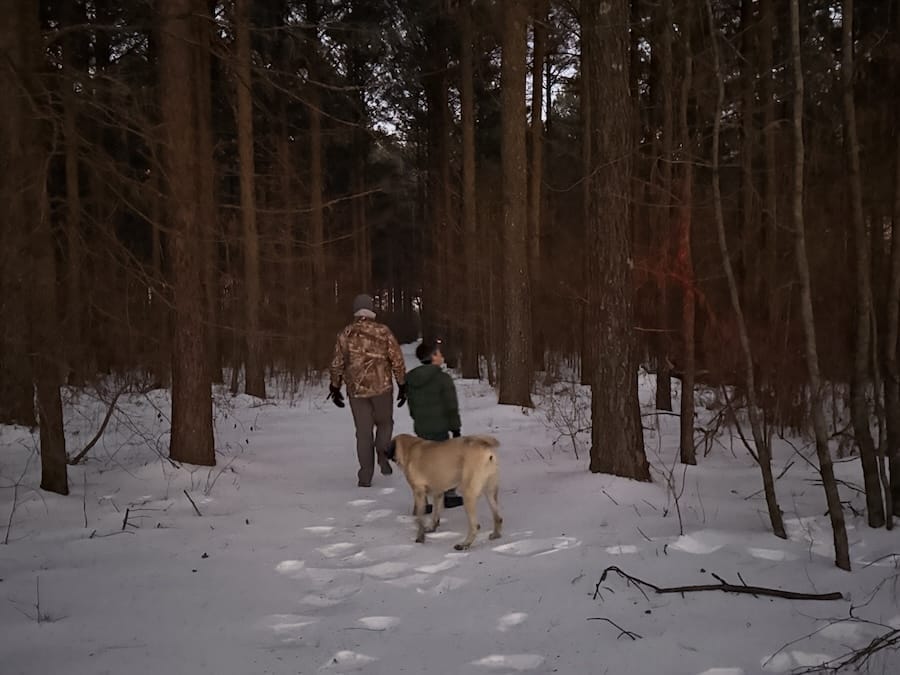
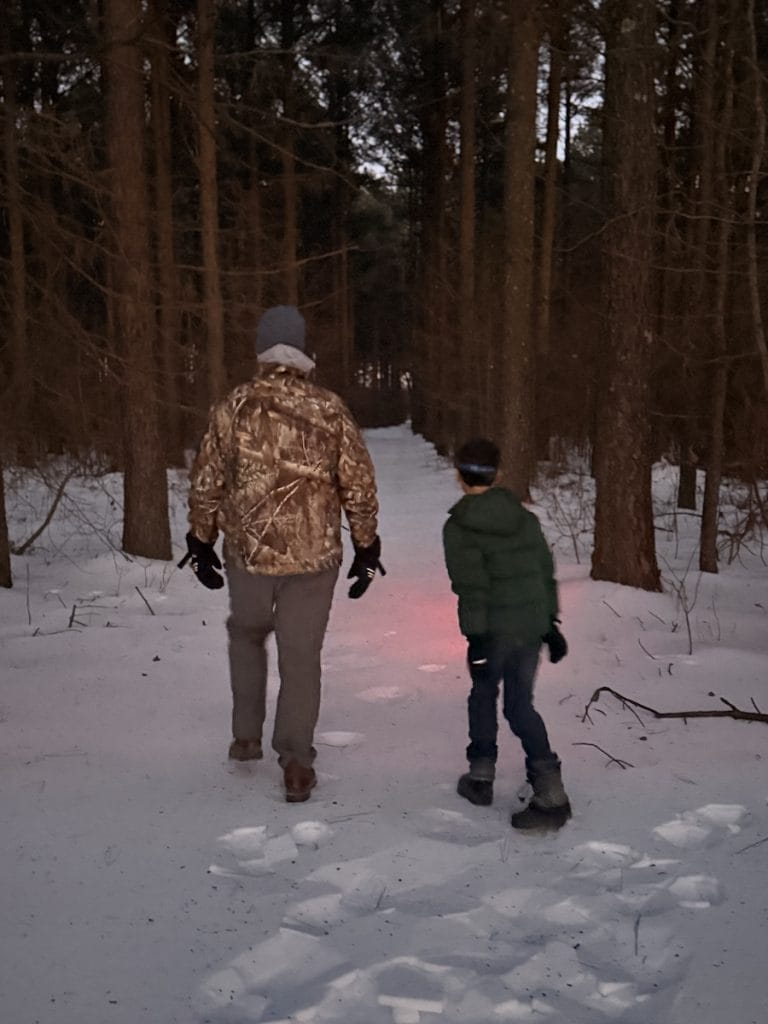
One of my favorite family traditions is going for night walks. We tend to do them more in the fall and winter when the leaves are off the trees because even a partial moon can cast enough silvery light to navigate once our eyes adjust to the darkness. We grab our headlamps (just in case) and venture into the forest at night, enjoying the simple quietude and looking for wildlife. Our first family night adventure was inspired by the children’s book “Owl Moon” by Jane Yolen. It’s a beautiful story about a family searching for owls during a full moon. The story sparked my son’s interest and on a bright night, a new year-round tradition was born. The forest truly comes alive at night, and over the years, we’ve learned that Arkansas’s woods hold many nocturnal secrets waiting to be discovered.
Going for a walk in the woods after dark is a totally different experience from a daytime hike. It’s like stepping into another world. On hot summer days, hiking after sunset offers relief from the heat, while in winter it’s a clever way to enjoy nature despite the short daylight hours. At night, you have to look beyond just your ability to see, and as a result, your other senses heighten. Every hoot, rustle and whisper of wind feels larger and more vivid in the darkness. Night hiking brings an element of mystery and excitement, turning a familiar trail into a new adventure.
Nocturnal Wildlife to Spot
One of the biggest thrills of an after-dark forest walk is encountering Arkansas’s nocturnal wildlife. Many creatures are most active at night, so keep your ears and eyes open. Here are some of the animals you might observe or hear in Arkansas’s night forest:
- Rabbits: Eastern cottontail rabbits are one of the most common animals you’ll spot on a night walk in Arkansas. They’re most active at dusk and after dark, when they venture out to feed while avoiding daytime predators. On our own evening walks, we often spot four or five rabbits between our house and the trail, frozen in place as their eyes catch the beam of our headlamps. Rabbits rely on stillness and camouflage for protection, so they often sit tight until the last second before darting into the brush. Look for quick flashes of movement along field edges, trails and open woods, especially in quieter areas where human traffic is low.
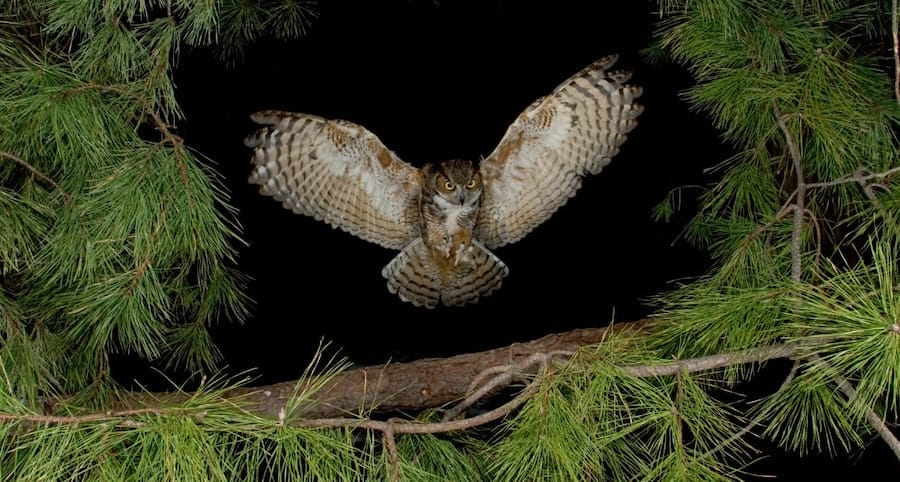
- Owls: Arkansas woodlands are home to several owl species and you’ll often hear them before you see them. Listen for the haunting calls of the Great Horned Owl with its classic deep hoots, or the Barred Owl’s distinctive hooting pattern that sounds like “Who cooks for you? Who cooks for you-all?” echoing through the trees. If you’re lucky, you might spot an owl silhouetted against the moonlit sky or catch the glow of its eyes in your flashlight. Owls are top nocturnal predators – they spend the night swooping silently through the woods, hunting for mice, insects, and other small prey.
- Bats: Most easily visible in the fading daylight, bats flutter overhead, snatching up mosquitoes and moths. Arkansas is home to about sixteen bat species (including small brown bats and endangered gray and Indiana bats in certain regions). You might see bats looping under streetlights or along forest edges, using echolocation to navigate and hunt in the dark. Bats are beneficial critters that help control insect populations, making summer nights more enjoyable for us humans.
- White-Tailed Deer: Deer are not strictly nocturnal, but they’re very active at night, especially at dawn and dusk. On an evening walk, you might surprise a white-tailed deer browsing along the trail or in a clearing. Deer have excellent night vision, so they usually notice you first, but walk quietly and listen for the rustle of leaves or the snap of a twig to indicate a deer might be in your midst. In winter, with the leaves off the trees, we’ve spotted deer moving through the moonlit woods, their white tails flashing as they vanish.
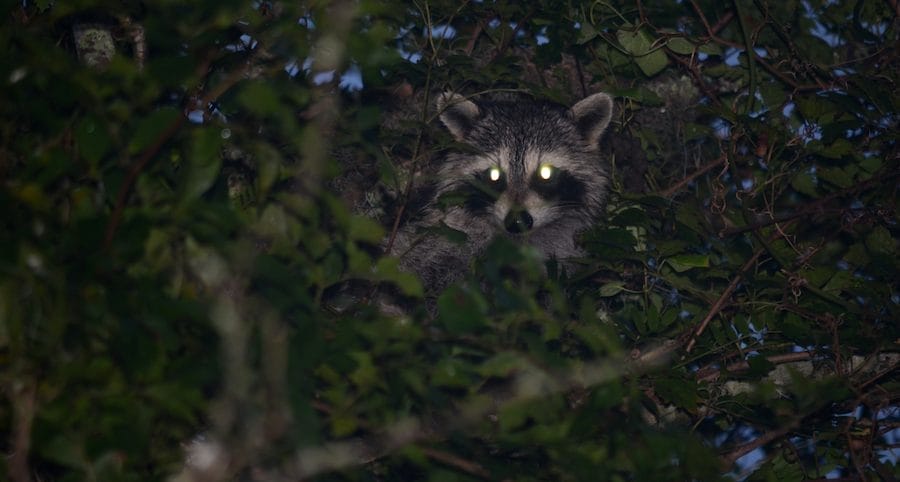
- Raccoons & Opossums: Both raccoons and opossums are classic night prowlers in Arkansas. These foraging animals come out after dark to forage for food. You might spot a raccoon climbing a tree or hear it rustling through leaves near a creek looking for crayfish and frogs. Opossums, North America’s only marsupial, also wander at night looking for insects, fruit or even carrion (that’s a fancy word for dead animals). If your flashlight catches the reflection of two bright eyes low to the ground, you could be seeing a raccoon or opossum staring back at you. These creatures are generally harmless (opossums famously might “play dead” if frightened), so enjoy watching them from a distance. If you have a streambed or pond on your trail, look for their tracks in the muddy areas along the edges. Raccoon prints resemble tiny human hands, while opossum tracks show a splayed thumb-like toe.
- Skunks: Striped skunks are common throughout Arkansas and are mostly nocturnal, which is why they’re far more likely to be active after sunset. At night, skunks shuffle slowly through the woods and along trails searching for insects, grubs, berries and small rodents. You may notice small cone-shaped holes in the soil where they’ve been digging, or hear a soft rustling in leaf litter before you ever see one. Skunks can’t see very well, so they are easily startled. On night walks, talking quietly or making gentle foot noise helps avoid surprising one at close range, which could result in getting sprayed.
- Armadillos: The nine-banded armadillo is another wonder of Arkansas nights. Armadillos prefer the night and often forage after dark when temperatures are cooler. They rely more on smell than sight, shuffling along as they search for insects and worms. When startled, armadillos may freeze, scurry off quickly, or bounce straight up before disappearing into the dark.
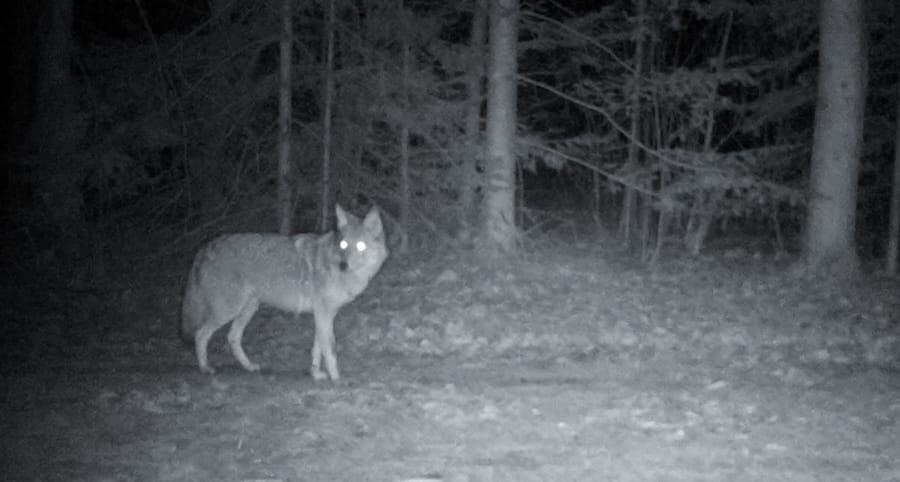
- Coyotes and Foxes: Arkansas’s forests and fields are also prowled by wild canines after dark. Coyotes are found in every county of Arkansas and are very adaptable and clever. At night, you may even hear their eerie, yipping howls off in the distance. Seeing a coyote isn’t likely since they usually keep their distance from humans, but it’s not impossible on a quiet night in rural areas. Even more elusive are both red foxes and gray foxes, which live in Arkansas. Red foxes often hunt in open fields by moonlight, while gray foxes are adept climbers that can even scramble up trees to escape danger. If you hear odd barks or a high-pitched scream at night, it could be a fox; their calls are strange and can sound almost like a human baby or a peacock. Whether or not you see them, knowing that canines are out there hunting rabbits and rodents adds to the thrill of the nocturnal forest.
- Black Bears: Arkansas was once nicknamed “The Bear State,” and although black bears were nearly wiped out in the 20th century, they have made a comeback in our forests. Healthy bear populations now live in the Ozark and Ouachita Mountains and some large wetlands of eastern Arkansas. Bears are usually most active in the early morning or just before dark. napping through the rest of the night, so it’s unlikely you’ll run into a bear on a casual family night hike, but it’s good to be aware they’re out there. Bears have incredible noses and usually smell or hear you and slip away long before you’d ever notice them.
- Bobcats: One of the most stealthy night hunters in Arkansas is the bobcat. These medium-sized wild cats are quite common across the state, but people rarely see them. Bobcats have tawny coats with black spots and a short “bobbed” tail. At night, a bobcat moves silently through the underbrush, ambushing rabbits, rodents and squirrels, helping to keep the rodent population in check. Seeing a bobcat is a rare treat; usually, they’ll see you first and slip away unseen. Like other predators, bobcats want nothing to do with humans, so there’s little danger.
Every time you walk into the forest at night, it feels a little different, and you will notice different things. One evening, you might hear owls calling back and forth or coyotes howling in the distance. On another night, the forest hums with the steady drone of cicadas and crickets, the chorus of frogs near water or the soft rustle of the leaves. Sometimes, the woods feel like a living soundtrack. Arkansas’s night forest is rich with sound, turning a simple walk into an immersive experience you can’t fully appreciate in daylight.
Exploring the Forest After Dark
Night walks don’t require much planning, but a little intentionality helps them feel relaxed and fun. Stick with easy, familiar trails and keep the walk short and unhurried. We walk a trail that meanders through the woods behind our house, but these trails are perfect for night hiking. The goal isn’t distance. It’s slowing down enough to notice how different the woods feel after sunset.
A headlamp or flashlight is helpful, especially one with a red-light setting. Red light preserves night vision and is less disruptive to wildlife. Just give your eyes a few minutes to adjust to the dark and you’ll be surprised how much you can see by moonlight alone. On bright nights, the forest often feels softly lit, while darker nights offer incredible stargazing when skies are clear.
Going together makes night walks more enjoyable, especially for families. Walk quietly, listen more than you talk, and let the forest set the pace. Pay attention to where you step and stay on familiar paths. Wildlife encounters are part of the magic, but observing from a distance keeps everyone comfortable, animals included.
A walk through the night forest is a wonderful adventure. Just remember to step softly, look and listen carefully and embrace the unique sights and sounds around you. As the book “Owl Moon” says, “when you go owling, you have to be quiet” – who knows what Arkansas wildlife you might spot when you venture into the night forest with eyes and ears wide open!


We do the work.
You check your email.
Sign up for our weekly e-news.
Get stories sent straight to your inbox!


Like this story? Read more from Julie Kohl
The stories that tell Arkansas’s history often center around explorers,...
Tornado season is part of life in Arkansas, and the time to think about...
I've got spring fever, and watching birds fill the sky as they head north...
Join the Conversation
Leave a Comment